✅ "Pharmacy-Trusted Since 2013."

Raw Australian Tea Tree Honey: (Beyond the Essential Oil)
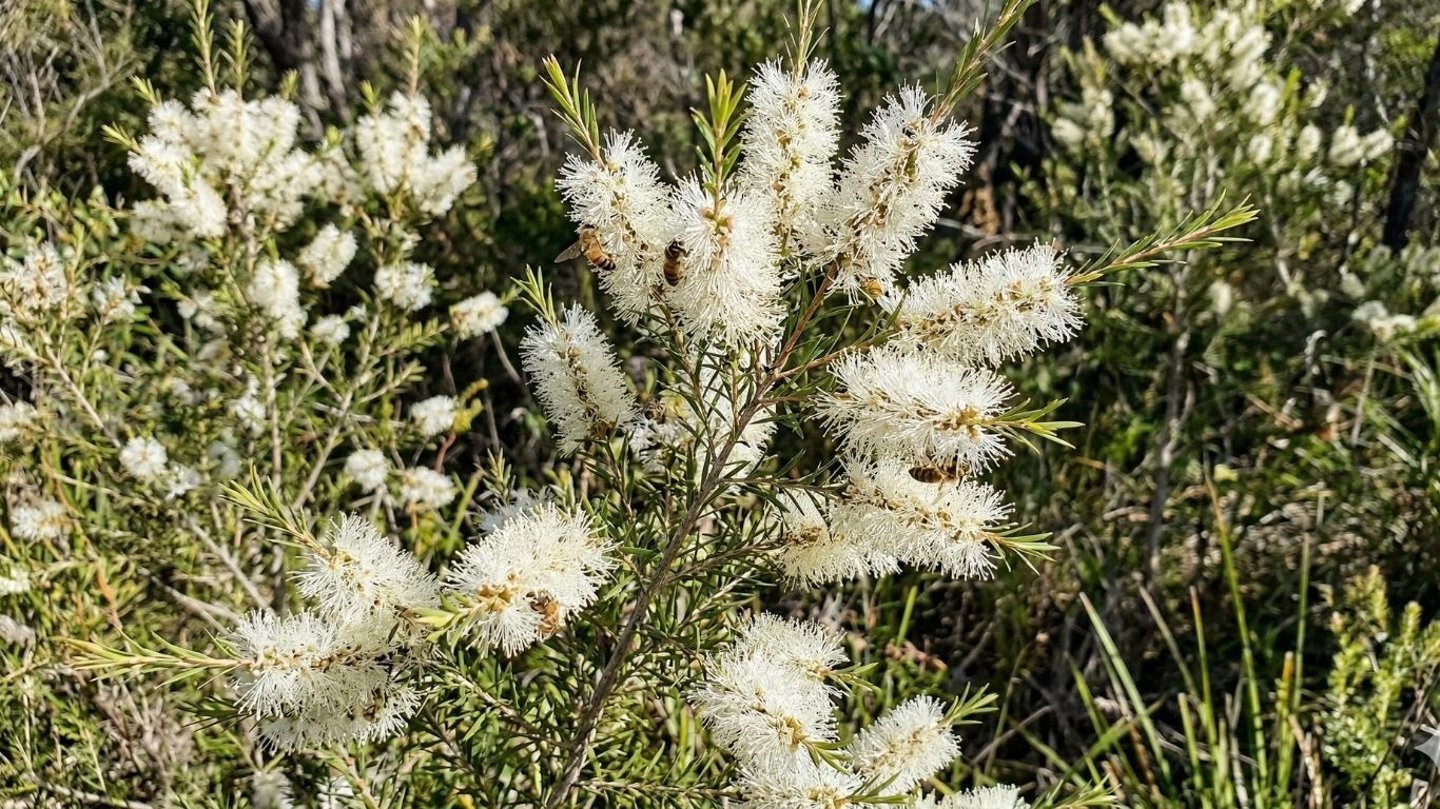
When people hear "Tea Tree," most immediately think of the potent essential oil found in skincare and natural first-aid kits. But this same native flora produces something arguably even more remarkable: Raw Australian Tea Tree Honey (Melaleuca alternifolia).
Bold, robust, and packed with unique bioactive properties, tea tree honey is a powerhouse of natural wellness. Whether you are looking for natural, highly active botanical support, an antioxidant boost, or simply a deeply flavourful addition to your pantry, understanding the benefits of raw Tea Tree honey is the first step.
Discover the science behind authentic Australian Tea Tree honey, how to seamlessly incorporate it into your daily life, and why strict cold-extraction is absolutely vital to preserving its uncompromised potency.
What is Australian Tea Tree Honey?
Raw Australian Tea Tree Honey is a rarer, highly active monofloral honey crafted from the nectar of the native Melaleuca alternifolia tree. While the global reputation of the tea tree was built on the essential oil distilled from its leaves, this premium honey source is a completely distinct, natural food product created when bees forage on the tea tree's delicate white blossoms.
Upon returning to the hive, bees naturally convert the nutrient-rich nectar and unique bioactive compounds into a rich, dark amber raw honey with fresh botanical undertones. A honey that sets it apart from standard commercially processed blends. A pure natural sweetener providing a complex range of natural, wellness-supporting properties.
To protect this delicate chemistry, authentic Melaleuca honey must be harvested using strict cold-extraction and unfiltered methods. This uncompromised approach ensures every naturally occurring enzyme, pollen grain, and antioxidant is perfectly preserved, resulting in a pure, pharmacy-standard raw honey—exactly as nature intended.
What is the Difference Between Tea Tree Essential Oil and Tea Tree Honey?
While both tea tree essential oil and tea tree honey originate from the native Australian tree Melaleuca alternifolia, they are fundamentally different substances created through entirely different natural and mechanical processes.
The essential oil is a highly concentrated, volatile compound produced commercially through the intense steam distillation of the tree's leaves and branches. Because of this extraction method, tea tree essential oil is strictly for topical application and is unsafe for human consumption.
In contrast, premium Australian Tea Tree Honey is created naturally by the ecosystem.
Honeybees bypass the leaves entirely, foraging exclusively on the tree's delicate, fluffy white flowers to collect the sweet, naturally rich nectar. Because the bees process pure floral nectar rather than volatile leaf oils, raw Australian Tea Tree Honey is completely safe to eat—transforming into a delicious, edible superfood packed with bioactive goodness.
However, the oil and the honey do share one vital connection:
Shared Botanical Defences: The remarkable natural properties that made Melaleuca alternifolia essential oil globally renowned are also present within the tree's nectar.
Naturally Bioactive: When bees transform this nectar, they capture a complex profile of bioactive compounds, antioxidants, and native phenols.
Ultimately, while the distilled oil provides a potent topical application, our cold-extracted, raw Australian Tea Tree Honey allows you to experience the wellness-supporting benefits of the Melaleuca plant in a completely natural, highly active, and delicious ingestible form.
Sourced from Australia's Wild Coastal Wetlands!


Native to the wild coastal wetlands of northern New South Wales and southeastern Queensland, the Melaleuca alternifolia (Australian Tea Tree) is built for absolute resilience. Thriving along pristine riverbanks, swamps, and waterlogged soils, these trees have evolved powerful botanical defences to flourish in harsh, flood-prone environments.
When bees forage on the tree's delicate white blossoms, they capture a concentrated dose of these protective, bioactive compounds. Through natural alchemy, the bees preserve the exact botanical power found in world-renowned tea tree oil, transforming it directly into a highly active, premium raw honey.
Isolated deep within these untouched Australian landscapes, the worker bees forage exclusively on pure, wild-growing flora. This isolation is vital. Not only does it protect the health of the hive against modern environmental stressors and biosecurity risks, but it also guarantees the absolute, uncompromised purity of the nectar they collect.
Raw Australian tea tree honey is the pure product of an untamed ecosystem—a wild, complex environment that simply cannot be replicated by commercial agriculture. When you taste Melli Magic™ raw Australian tea tree honey, you are experiencing a direct reflection of this rugged, biodiverse environment—a delicate botanical chemistry retaining its uncompromised natural power and goodness.
Why is Australian Tea Tree Honey One of the Most Bioactive Honeys on the Planet?
The question distinguishes a premium, science-backed botanical product from standard mass-produced commercial honeys.
The extraordinary bioactivity of Melaleuca alternifolia honey comes down to a unique combination of evolutionary plant biology and precise chemical transfer. Here is the breakdown of exactly why this honey is a global heavyweight, followed by the specific scientific tests that prove it.
Why is Tea Tree Honey so Bioactive?
Understanding the Science: The Three Botanical Drivers Behind Tea Tree Honey's Potent Bioactivity!
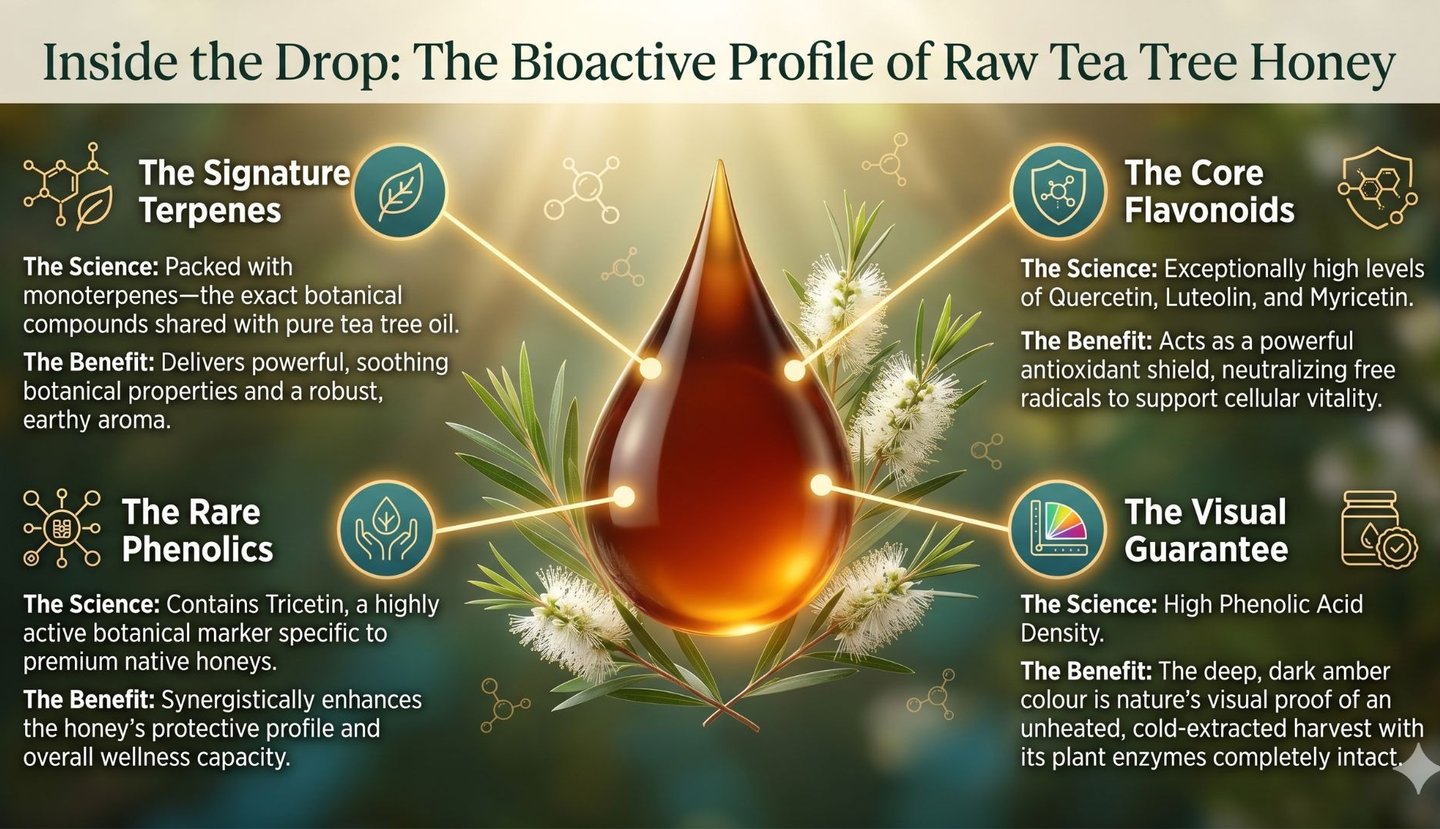
1. The Environmental Stress Factor: As discussed, Melaleuca alternifolia grows natively in harsh, waterlogged, flood-prone environments. To survive root rot, fungal attacks, and severe weather, the tree must produce massive amounts of "secondary metabolites" (phenolics and flavonoids). These act as the plant's immune system. When bees harvest the nectar, this hyper-concentrated botanical immune system is transferred directly into the honey.
2. The Transfer of Monoterpenes: This is what makes Melaleuca honey so unique compared to other floral sources. The volatile organic compounds (VOCs) that make tea tree essential oil famous—specifically monoterpenes—are present in the plant's nectar. Unlike highly processed honeys where these delicate compounds flash off during heat treatment, raw, cold-extracted Tea Tree honey suspends these active terpenes perfectly within the amber drop.
3. A Rare Flavonoid Profile: While most honeys have basic sugar and trace mineral profiles, Melaleuca species are known to possess rare and highly potent flavonoids. The presence of Tricetin, alongside massive amounts of Quercetin, Luteolin, and Myricetin, creates a synergistic effect. They work together to aggressively neutralise free radicals, giving the honey an incredibly high antioxidant capacity.
The Tests Used to Prove It
When laboratories analyse Melaleuca alternifolia honey, they do not just look at sugar content. They run advanced biochemical assays to measure its specific bioactive power. Here are the tests conducted in apicultural and university labs to verify these claims:
1. LC-HRMS and HPLC (Chemical Fingerprinting)
What it is: Liquid Chromatography-High Resolution Mass Spectrometry.
What it proves: This is the ultimate test for authenticity and botanical origin. It maps the exact chemical "fingerprint" of the honey, identifying the specific floral markers like Tricetin and Luteolin. It proves that the honey came from the Melaleuca blossoms and contains those specific bioactive flavonoids.
2. The Folin-Ciocalteu Assay (Total Phenolic Content - TPC)
What it is: A chemical assay that measures the exact density of phenolic acids in a substance.
What it proves: It verifies the antioxidant volume of the honey. Because phenolic acids dictate the dark colour of the honey, a TPC test on Tea Tree honey always returns exceptionally high results compared to standard light honeys, scientifically proving its massive antioxidant load.
3. DPPH and ORAC Assays (Antioxidant Strength)
What it is: Tests that measure how effectively a substance can "scavenge" or neutralise harmful free radicals.
What it proves: While the TPC test measures how many phenolics are present, DPPH and ORAC tests measure how strong they are at protecting cells. Melaleuca honeys routinely score at the very top of these scales, proving their efficacy as a functional wellness food.
4. Minimum Inhibitory Concentration (MIC) Testing
What it is: A microbiological laboratory test where the honey is introduced to various bacterial strains on an agar plate to see how well it stops them from growing.
What it proves: This tests the direct, active power of the honey. Due to the high levels of glucose oxidase (which naturally produces slow-release hydrogen peroxide) combined with the unique botanical monoterpenes from the tea tree, Melaleuca honeys demonstrate profound bioactivity in these laboratory environments, actively inhibiting the spread of common pathogens in petri dishes; a precision-engineered transparent dish used by biologists to host microbial cultures.
"While Manuka has long held the spotlight through heavy promotional activity, recent Manuka Comparison Studies conducted here in Australia have begun to shift the conversation. Researchers have found that raw Australian Tea Tree honey (Melaleuca alternifolia) doesn't just compete—it offers a unique, peroxide-based bioactivity and a phenolic density that stands in a class of its own. It is driven by this complex botanical profile, rather than relying on MGO alone like Manuka."
How to Use Tea Tree Honey for Natural Wellness
Nurturing Natural Balance & Gut Wellness
Here is something that often surprises people: raw, unpasteurised honey is a complex, enzyme-rich food. It contains natural oligosaccharides—compounds recognised for their prebiotic properties and activity—alongside organic acids and enzymes that contribute to a balanced internal environment.
Research from Southern Cross University into bees foraging on Melaleuca (Tea Tree) revealed a fascinating impact on the bees' own microbiome health. While human studies are an exciting and emerging field, the unique chemical profile of raw Tea Tree honey aligns perfectly with a lifestyle focused on digestive wellness and whole-food nutrition.
The Melli Magic Ritual: adding a tablespoon of raw Tea Tree honey to your daily routine—stirred through Greek yoghurt, eating straight from the spoon, or mixed into a lukewarm lemon water—is a simple, delicious way to embrace the benefits of raw tea tree honey.
Important Tip: To preserve the delicate enzymes that make raw honey so valuable, avoid heating it above 40°C. High temperatures neutralise the very "live" components that distinguish our honey from processed alternatives.
Botanical Care for Skin Vitality
Raw honey has been a staple in traditional beauty rituals for centuries. The unique composition of Tea Tree honey, with its rich density and natural bioactive profile, makes it an exceptional choice for topical skin applications and DIY wellness masks
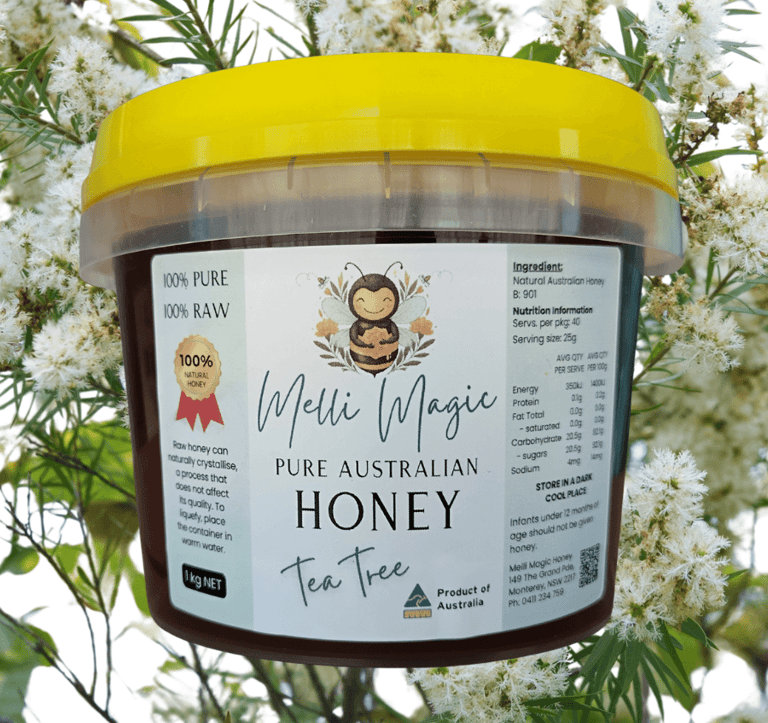
Melli Magic Honey™ Raw Tea Tree Honey
We are committed to providing the powerful chemistry of premium raw Australian Tea Tree honey. The strict cold extraction and unfiltered process ensure that every drop maintains its natural bioactivity.
Melli Magic Honey®
+61-411234759
Melli Magic Honey® © 2026. All rights reserved.
Subscribe to our newsletter!
Registered Trade mark
ABN: 65366959676
149 The Grand Parade, Monterey, NSW, 2217