✅ "Pharmacy-trusted since 2013, now delivering Australia's rarest raw honeys direct to your door."
Raw Australian Tea Tree Honey:
2 Bioactive Melaleuca Nectars
When you hear "Tea Tree," you probably think of the powerful essential oils extracted from the leaves of Melaleuca alternifolia, which are commonly used in skincare products and first-aid kits. However, this native Australian plant offers something even more extraordinary: a rare, highly bioactive raw honey.
Bold, robust, and packed with unique therapeutic properties, Melaleuca honeys are a delicious powerhouse of natural wellness.
Whether you are looking for highly active botanical support, a natural antioxidant boost, or simply a deeply flavourful addition to your pantry, it all starts with the hive.
In this guide, you will discover the science behind authentic Australian Tea Tree honey, learn how to seamlessly incorporate it into your daily routine, and understand why the strict unpasteurised cold-extraction process is essential for preserving its uncompromised potency.
The Tea Tree Honey Difference:
Pure Botanical Source: Harvested from wild, native Melaleuca blossoms.
Highly Bioactive: 100% unpasteurised and cold-extracted to retain live enzymes and natural antioxidants.
Safe & Edible: A completely natural, ingestible wellness product—distinct from topical essential oils.
The Botanical Secret: What Makes Melaleuca Honey Different?
For many people, "Tea Tree" is just a familiar fragrance found in a small glass bottle. But in the botanical world, Tea Tree broadly refers to various native Australian shrubs and trees belonging to the Melaleuca genus.
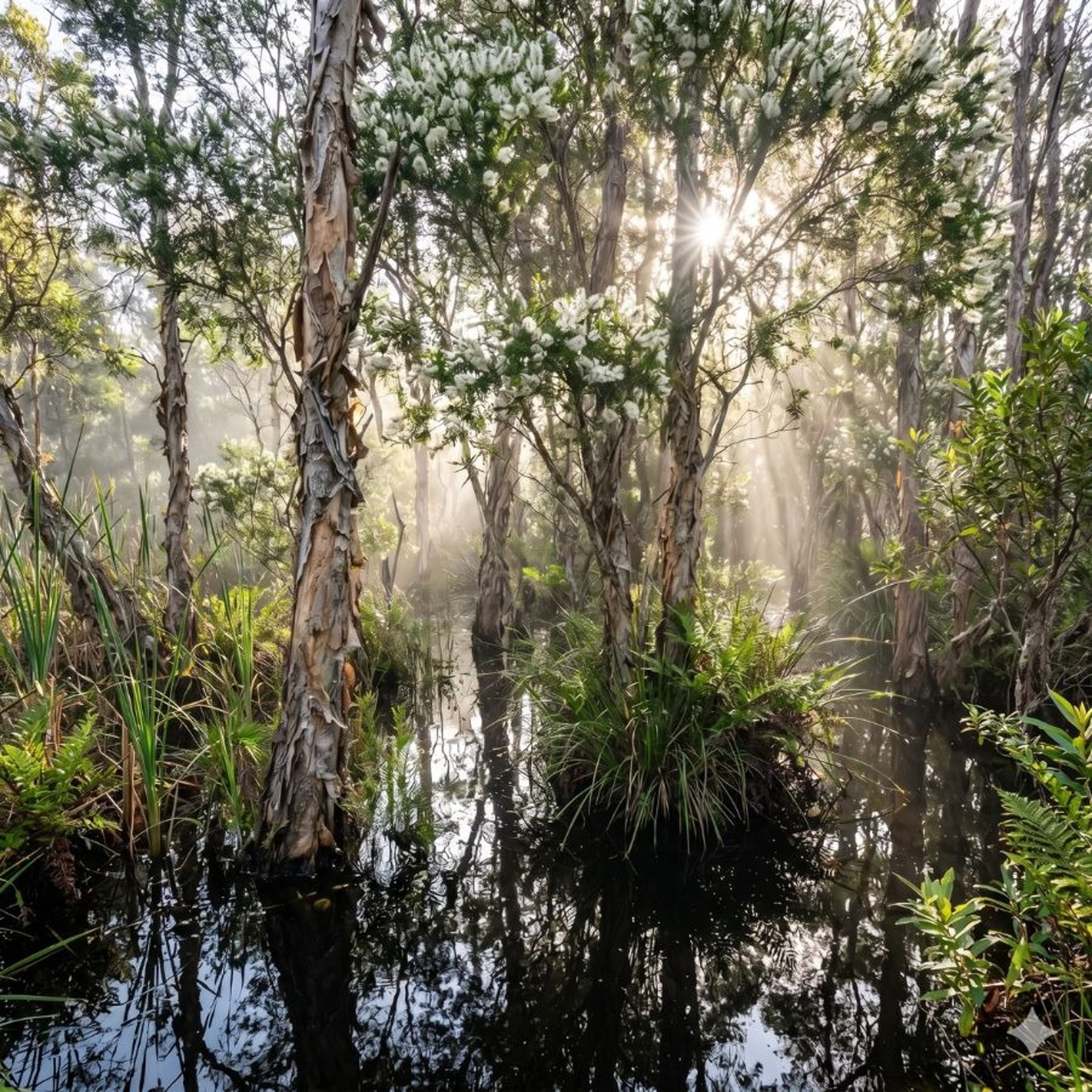
For a beekeeper, these indigenous plants are an invaluable resource. When Melaleuca species burst into their characteristic fuzzy, brush-like blooms—often thriving along Australia's rugged coastlines and wetlands—they produce a highly complex nectar that is entirely distinct from standard floral varieties.
This unique botanical profile is the secret behind the honey's signature character. As the bees gather and cure this nectar inside the hive, it transforms into a beautifully dark, robust honey with a bold, slightly woody flavour.
But that deep amber colour indicates much more than just a rich taste—it reflects the exceptionally high enzymatic activity naturally found in native Melaleuca nectar. By carefully cold-extracting the honey to protect these delicate live enzymes, we preserve the potent, bioactive properties that make it a premium therapeutic superfood.
Exploring 2 Bioactive Tea Tree Nectars - Melaleuca alternifolia and Melaleuca quinquenervia
With over a decade of observing how bees interact with native Australian flora, we know firsthand that not all Melaleuca species are the same. A truly premium Tea Tree honey relies on a diverse foraging environment. Here are five of the most common Melaleuca nectars found along the East Coast and its wetlands—with Melaleuca alternifolia (Narrow-leaved Tea Tree) and Melaleuca quinquenervia (Broad-leaved Paperbark) being the most abundant producers—that give raw Tea Tree honey its signature robust flavour and potent bioactive profile.
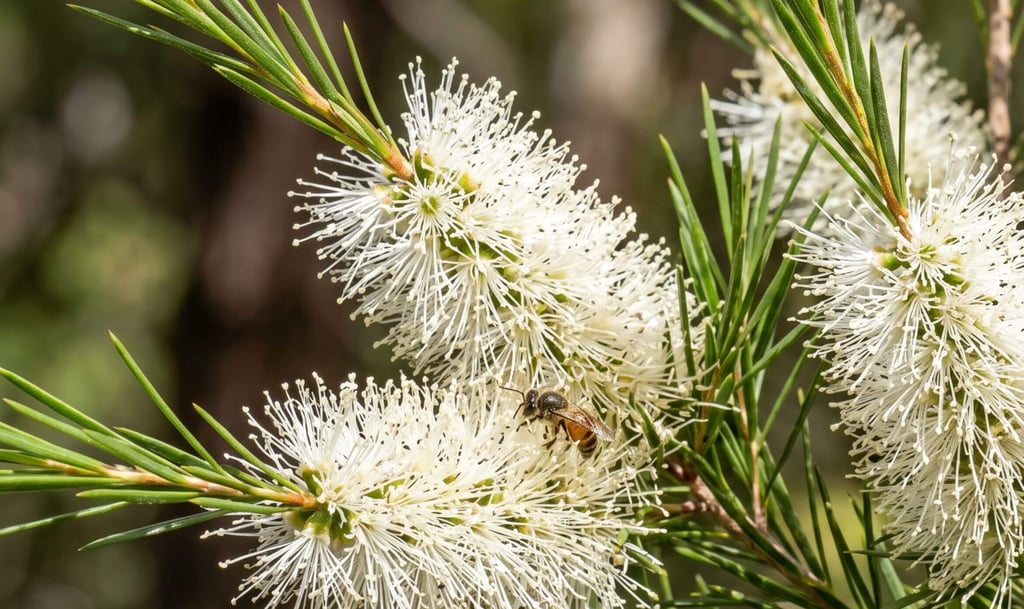
1. Melaleuca alternifolia (Narrow-leaved Tea Tree)
This is the botanical gold standard. Naturally thriving in the coastal river basins and swampy wetlands of northern New South Wales up into southeastern Queensland, this is the same plant harvested for world-famous essential oils. However, when bees visit its delicate, fluffy white blossoms, they create something entirely different. The nectar from alternifolia yields a profoundly bioactive honey with a bold, distinct flavour profile and exceptional therapeutic potency.
The Difference: Tea Tree alternifolia Oil vs. Tea Tree alternifolia Honey
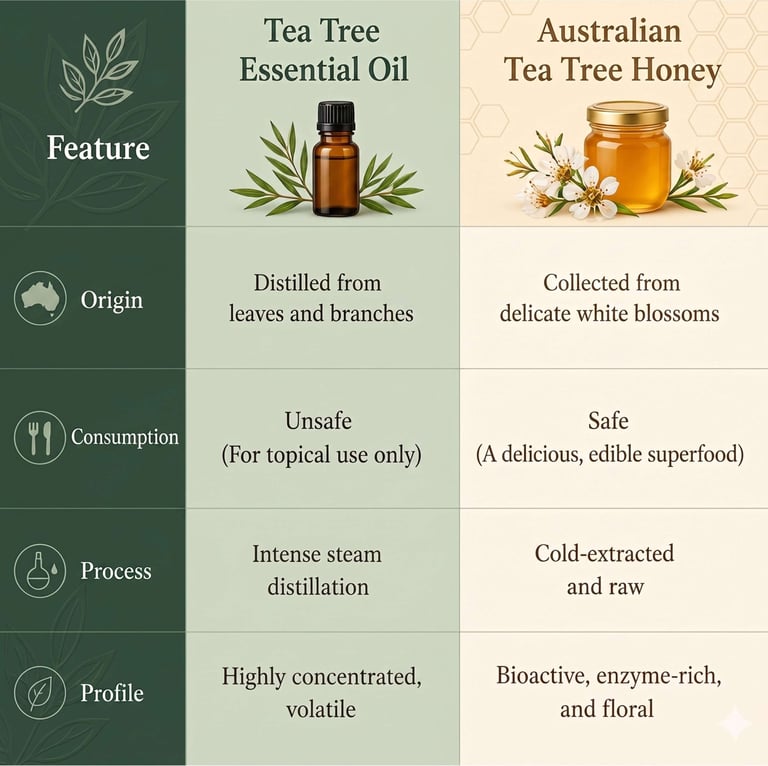
Melaleuca alternifolia essential oil is a highly concentrated, volatile compound produced commercially through the intense steam distillation of the tree's leaves and branches. Because of this extraction method, tea tree oil is strictly for topical application and is unsafe for human consumption.
In contrast, raw Melaleuca alternifolia honey is created naturally by the ecosystem. Honeybees bypass the leaves entirely, foraging exclusively on the tree's delicate, fluffy white flowers to collect the sweet, naturally rich nectar. Because the bees process pure floral nectar rather than volatile leaf oils, raw Australian Tea Tree Honey is completely safe to eat—transforming it into a delicious, edible superfood packed with bioactive goodness. However, the oil and the honey do share one vital connection:
Shared Biological Protection Systems:
The essential oil of Melaleuca alternifolia is renowned worldwide for its remarkable natural properties, which are also found in the plant's nectar.
Naturally Bioactive: When bees transform this nectar, they capture a complex profile of bioactive compounds, antioxidants, and native phenols.
While distilled oils provide a strong topical application, raw Australian Melaleuca alternifolia honey offers the plant's wellness benefits in a natural and delicious form. To preserve its delicate natural chemistry, authentic Melaleuca honey must be cold-extracted and unfiltered, retaining every living enzyme, pollen grain, and antioxidant for a pure, high-quality product as nature intended.
Melaleuca alternifolia is the global standard for natural antiseptics, primarily due to a specific organic compound within its leaves called terpinen-4-ol. In its distilled essential oil form, this broad-spectrum powerhouse is scientifically proven to target a wide range of topical bacteria and fungi. While the bees do not distil concentrated oils, they capture the very essence of this therapeutic plant. By foraging strictly on the delicate white blossoms of alternifolia, the hive infuses the resulting nectar with the plant's unique botanical markers. When combined with the naturally occurring enzymatic activity of cold-extracted honey, this heritage creates a remarkably potent, bioactive raw honey. It allows you to experience the highly active, protective qualities of this Melaleuca.
2. Melaleuca quinquenervia (Broad-leaved Paperbark)
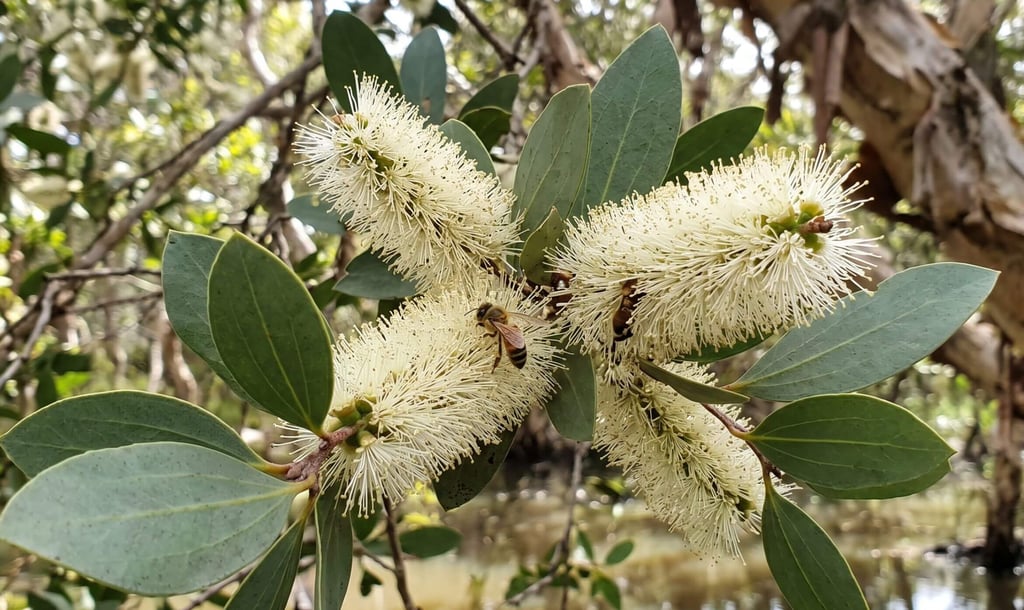
The Melaleuca quinquenervia—with its iconic, papery bark boasts a significant native footprint. It thrives across estuaries and coastal wetlands, stretching from Botany Bay in Sydney to northern Queensland and even into Papua New Guinea. This vast coastal range makes the iconic paperbark a vital nectar producer. When the blossoms open, the hives work overtime to gather their rich nectar. The final harvest yields a raw honey defined by its deep, caramel-like sweetness and exceptionally high enzymatic activity."
Beyond its rich flavour, the botanical chemistry of this broad-leaved Paperbark brings a highly specific bioactive profile to the harvest. While other Tea Tree varieties are famous for their aggressive, extensive topical defence, quinquenervia is primarily characterised by an organic compound called 1,8-cineole (eucalyptol).
When bees cure this unique nectar, they lock in a massive concentration of live enzymes. As long as the honey is carefully cold-extracted to protect this delicate structure, these enzymes continuously generate naturally occurring hydrogen peroxide. This is the vital mechanism that gives the raw honey its gentle yet highly stable bioactive strength.
For daily wellness, this natural chemistry translates into remarkable therapeutic benefits. Because of its eucalyptol heritage and potent enzymatic action, honey rich in quinquenervia nectar is exceptionally comforting for the throat when consumed warm or directly from the spoon.
Furthermore, the deep, dark amber hue of this specific harvest is a direct visual indicator of its dense antioxidant capacity. This makes it an ideal, deeply nourishing addition to your daily routine, offering a natural, highly active botanical defence to support overall daily wellness.
Sourced from Australia's Wild Coastal Wetlands
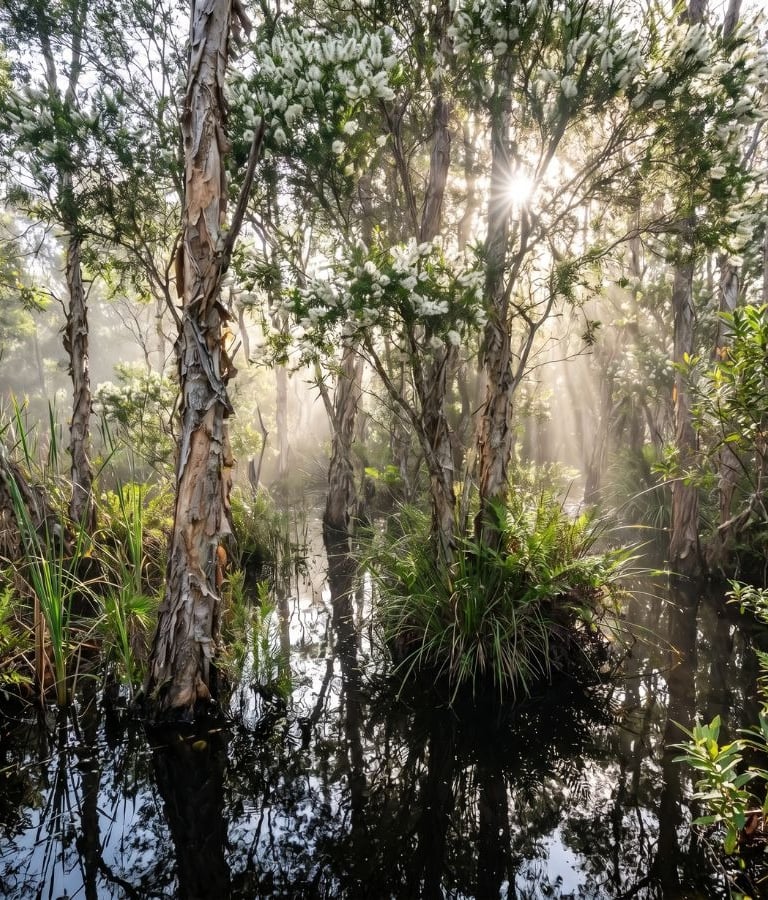
Native to the wild coastal wetlands of northern New South Wales and southeastern Queensland, the Melaleuca alternifolia (Australian Tea Tree) is built for absolute resilience. Thriving along pristine riverbanks, swamps, and waterlogged soils, these trees have evolved powerful botanical defences to flourish in harsh, flood-prone environments.
The Power of Natural Alchemy
When bees forage on the tree's delicate white blossoms, they capture a concentrated dose of these protective, bioactive compounds. Through natural alchemy, the bees preserve the exact botanical power found in world-renowned tea tree oil, transforming it directly into a highly active, prime raw honey.
Untamed and Uncompromised
Isolated deep within these untouched Australian landscapes, the worker bees forage exclusively on pure, wild-growing flora. This isolation is vital. Not only does it protect the health of the hive against modern environmental stressors and biosecurity risks, but it also guarantees the absolute, uncompromised purity of the nectar they collect.
Raw Australian tea tree honey is the pure product of an untamed ecosystem—a wild, complex environment that simply cannot be replicated by commercial agriculture. When you taste Melli Magic® raw Australian tea tree honey, you are experiencing a direct reflection of this rugged, biodiverse environment—a delicate botanical chemistry retaining its uncompromised natural power and goodness.
Why is Australian Tea Tree Honey one of the most Bioactive Honeys on the Planet?
This is the question that distinguishes a premium, science-backed botanical product from standard, mass-produced commercial honeys.
The extraordinary bioactivity of Melaleuca alternifolia honey comes down to a unique combination of evolutionary plant biology and precise chemical transfer. Here is the breakdown of exactly why raw Tea Tree honey is a global heavyweight.
Understanding the Science: The Three Botanical Drivers Behind Tea Tree Honey's Potent Bioactivity
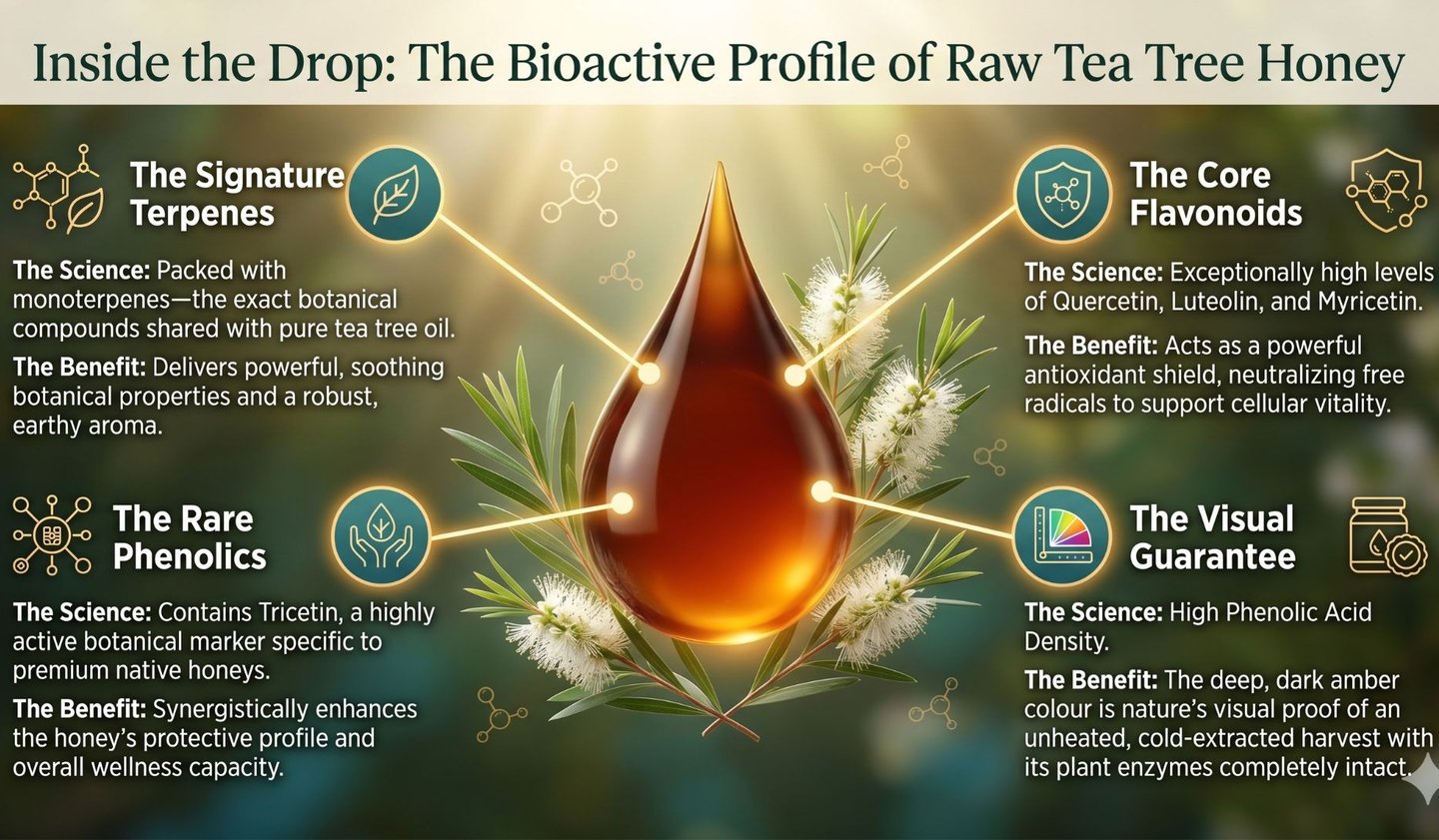
1. The Environmental Stress Factor: As discussed, Melaleuca alternifolia grows natively in harsh, waterlogged, flood-prone environments. To survive root rot, fungal attacks, and severe weather, the tree must produce massive amounts of "secondary metabolites" (phenolics and flavonoids). These act as the plant's immune system. When bees harvest the nectar, this hyper-concentrated botanical immune system is transferred directly into the honey.
2. The Transfer of Monoterpenes: This is what makes Melaleuca honey so unique compared to other floral sources. The volatile organic compounds (VOCs) that make tea tree essential oil famous—specifically monoterpenes—are present in the plant's nectar. Unlike highly processed honeys where these delicate compounds flash off during heat treatment, raw, cold-extracted Tea Tree honey suspends these active terpenes perfectly within the amber drop.
3. Rare Flavonoid Profile: While most honeys have basic sugar and trace mineral profiles, Melaleuca species are known to possess rare and highly potent flavonoids. The presence of Tricetin, alongside massive amounts of Quercetin, Luteolin, and Myricetin, creates a synergistic effect. They work together to aggressively neutralise free radicals, giving the honey an incredibly high antioxidant capacity.
How to Use Tea Tree Honey for Natural Wellness
Nurturing Natural Balance and Gut Health
Here is something that often surprises people: raw, unpasteurised honey is a complex, enzyme-rich food. It contains natural oligosaccharides—compounds recognised for their prebiotic properties and activity—alongside organic acids and enzymes that contribute to a balanced internal environment.
Research from Southern Cross University into bees foraging on Melaleuca (Tea Tree) revealed a fascinating impact on the bees' own microbiome health. While human studies are an exciting and emerging field, the unique chemical profile of raw Tea Tree honey aligns perfectly with a lifestyle focused on digestive wellness and whole-food nutrition.
The Melli Magic® Gut Ritual:
Adding a tablespoon of raw Tea Tree honey to your daily routine is a simple, delicious way to embrace its benefits. Try it:
Stirred through Greek yoghurt
Mixed into lukewarm lemon water
Or simply eaten straight from the spoon
Important Tip: To preserve the delicate enzymes that make raw honey so valuable, avoid heating it above 40°C. High temperatures neutralise the very "live" components that distinguish our honey from processed alternatives.
Botanical Care for Skin Vitality
Raw honey has been a staple in traditional beauty rituals for centuries. The unique composition of Tea Tree honey, with its rich density and natural bioactive profile, makes it an exceptional choice for topical skin applications and DIY wellness masks.
The Melli Magic® Skin Ritual:
For a therapeutic botanical facial treatment, apply a thin, even layer of raw tea tree honey to clean, damp skin. Allow it to sit for 15 to 20 minutes to let the active compounds take effect. Then, gently rinse it away with warm water to reveal a balanced and radiant complexion.
Melli Magic Honey® Raw Tea Tree Honey
Why Choose Melli Magic?
Pure Botanical Origin: Sourced directly from isolated, wild-growing Melaleuca alternifolia blossoms.
Highly Bioactive: Packed with naturally occurring flavonoids, prebiotic oligosaccharides, and active enzymes.
Strictly Cold-Extracted: Never heated above 40°C, ensuring the delicate, "live" botanical chemistry remains completely intact.
Complex Floral Profile: A deeply robust, dark amber honey with a smooth, naturally floral finish.
Versatile Wellness Support: The perfect cornerstone for your daily gut health routine or as a therapeutic DIY botanical skin ritual.
We are committed to delivering the exceptional properties of premium Australian Tea Tree honey, ensuring that every drop maintains its natural bioactivity.
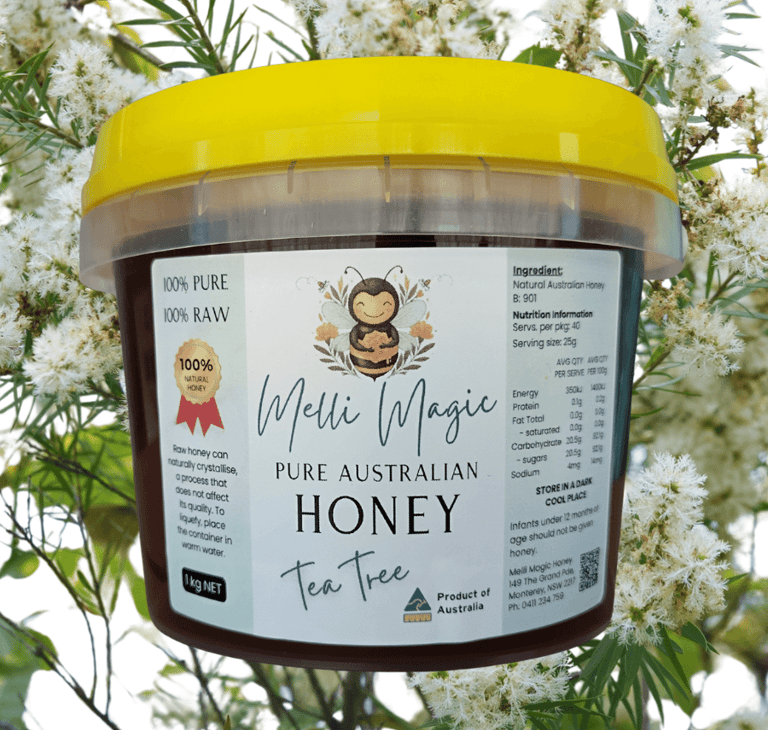
Sizes Available: 500 g and 1 kg
Packaging: Packaged in durable, BPA-free, food-grade containers to guarantee safe transport while preserving absolute purity.
Ingredients: 100% Raw Australian Tea Tree Honey (Melaleuca alternifolia).
Melli Magic Honey®
+61-411234759
Melli Magic Honey® © 2026. All rights reserved.
ABN: 65366959676
149 The Grand Parade, Monterey, NSW, 2217