"Pharmacy-Trusted Since 2013."

Yellow Box Honey Benefits:
Taste & Origins

Regarded as a crowning jewel of Australian native flora, Yellow Box honey (Eucalyptus melliodora) is prized by connoisseurs for more than just its smooth, buttery sweetness. For those seeking premium wellness foods, the true value lies deep within its unique botanical profile. From its rare, naturally low-GI properties to its rich profile of natural enzymes, exploring the full spectrum of Yellow Box honey benefits reveals exactly why this premium, slow-candying honey is highly sought after. Let’s explore its bushland origins, its distinct taste notes, and the science behind what makes it so exceptional.

What is Yellow Box Honey?

The Botanical Source (Eucalyptus melliodora)

In the sun-soaked western slopes and plains of Australia’s eastern states, the majestic Yellow Box tree (Eucalyptus melliodora) flourishes. This resilient, slow-growing eucalypt is a pillar of the native bushland ecosystem, providing vital habitat while producing one of the most highly prized nectars in the world.

Unlike cultivated crops, the bloom cycle of the Yellow Box is wild and entirely dictated by nature. It does not flower on a reliable annual schedule. Instead, these magnificent trees typically blossom only every two to three years, relying heavily on a very specific sequence of deep soil moisture and temperate spring weather. When conditions align between September and February, the trees produce a heavy, golden nectar flow that is absolute perfection.

Because this harvest is so rare and intermittent, it requires precise, ethical apiary management. Producing a true, single-origin Yellow Box honey means working in harmony with the Australian landscape—placing hives carefully to ensure the bees thrive without being overstressed, and leaving plenty of resources for the colony itself. By taking only the surplus and relying strictly on cold-extraction methods directly from the comb, the delicate botanical enzymes are preserved. This minimal-intervention approach protects both the bees and the bushland, ensuring the honey remains a pure, unadulterated reflection of its wild origins.

The Iconic Buttery Taste Profile

When it comes to culinary applications, Yellow Box honey is celebrated for its remarkable balance. While many native Australian eucalypt varieties present a sharp or overly robust flavour profile, Eucalyptus melliodora yields a famously mild, smooth, and incredibly dense nectar. It is characterised by its warm, buttery tasting notes and a clean, delicate sweetness that leaves no harsh or lingering aftertaste.

This exceptional smoothness is exactly what makes it a staple in premium kitchens. Because the flavour is rich yet understated, it acts as a flawless natural enhancer rather than a dominating ingredient. It sweetens without overpowering the dish. Whether drizzled over fine cheeses, folded into morning oats, or used to balance the acidity in light vinaigrettes, its dense, liquid consistency integrates perfectly. It is also highly favoured by tea and coffee connoisseurs, as it provides that beautiful sweetness without masking the complex, roasted notes of the beverage itself.

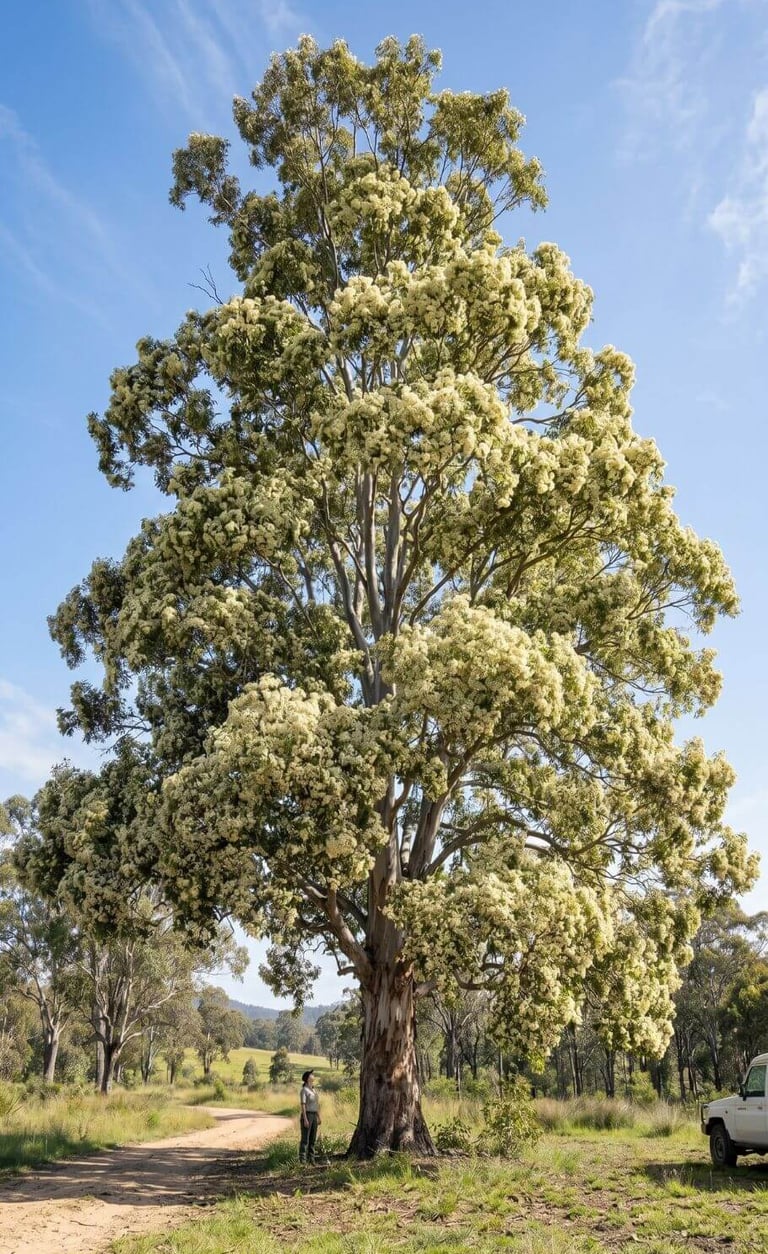
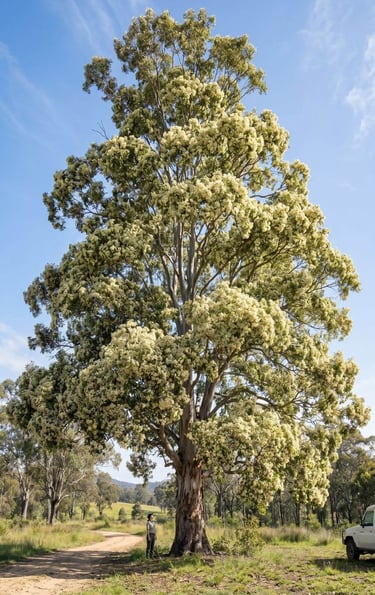
a giant yellow box tree in full bloom
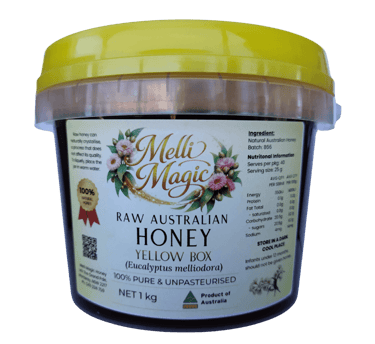
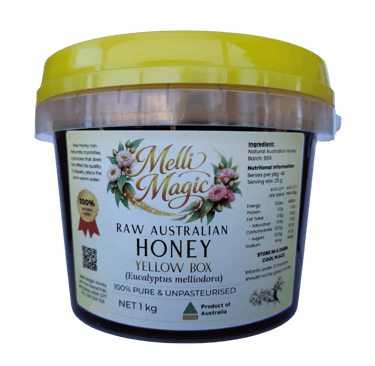
Melli Magic Yellow Box honey 1 kg tub

Does Yellow Box Honey Candy?

The Science of the Fructose-to-Glucose Ratio

One of the most common questions from honey connoisseurs is whether their raw honey will eventually candy in the pantry. The short answer is that all genuine, raw, and unpasteurised honey is a naturally supersaturated solution. Over time, it is entirely normal for these natural sugars to bind together and crystallise—a process beekeepers refer to as "candying." In fact, eventual candying is a hallmark of pure, unadulterated honey, not a sign of spoilage.

However, the speed at which this transformation happens depends entirely on the specific botanical source and its molecular makeup.

The secret lies in the balance of the honey's two primary natural sugars: glucose and fructose. Glucose has lower solubility, meaning it is the sugar that readily separates from the water content and forms solid crystals. Fructose, on the other hand, is highly soluble and actively resists crystallisation.

This is where Eucalyptus melliodora stands completely apart from the rest of the apiary world. True Yellow Box honey naturally possesses an exceptionally high fructose-to-glucose ratio. Because the fructose levels are so dominant, the glucose molecules are kept suspended in a liquid state for a remarkably long time.

While it can theoretically candy after years—or if stored in extremely cold temperatures—authentic Yellow Box honey is internationally renowned for being slow to crystallise.
What Are the Health Benefits of
Yellow Box Honey?

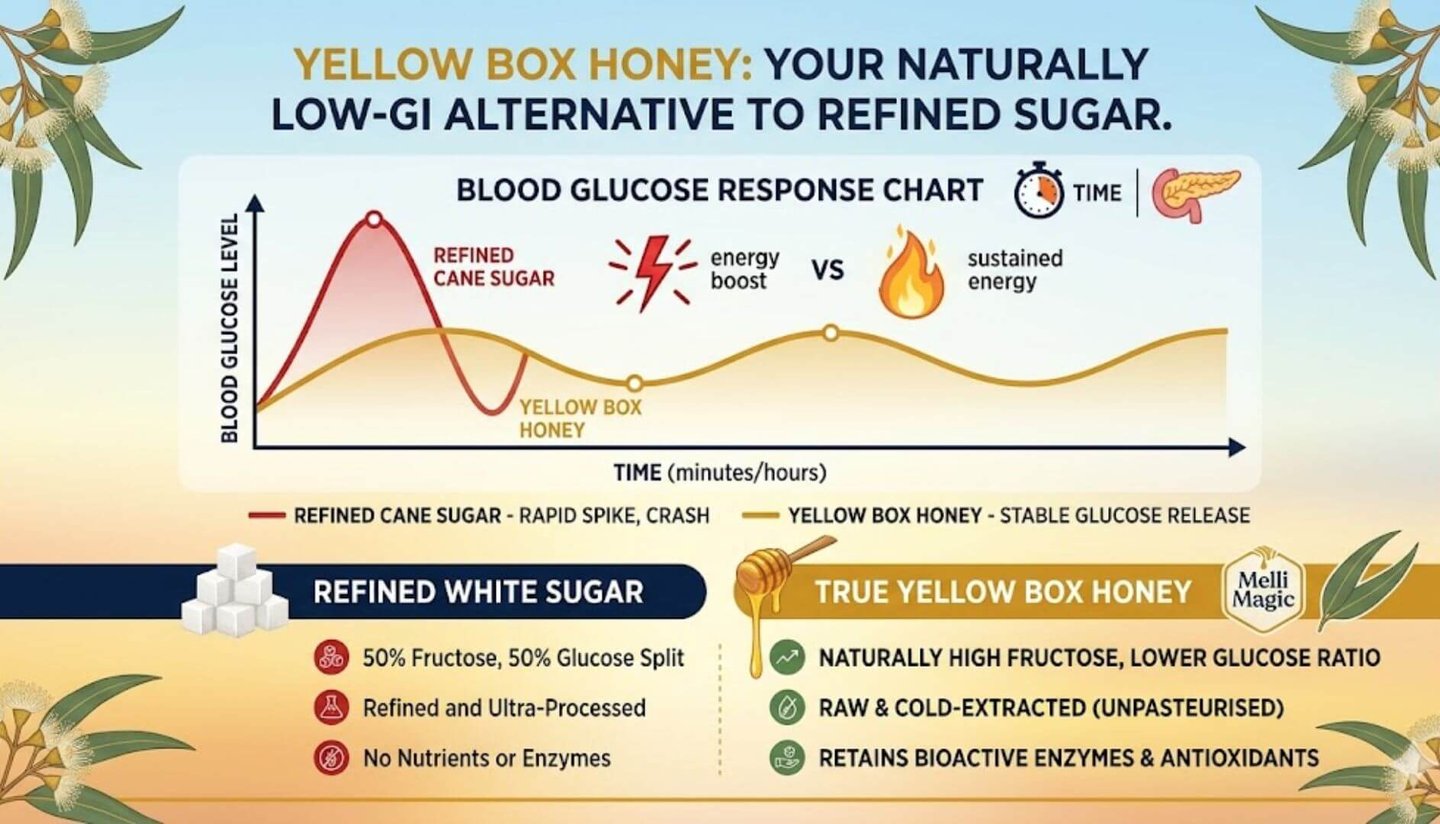
sugar yellow box honey GI comparison infogram

A Naturally Low-GI Sugar Alternative

For health-conscious consumers, one of the most significant advantages of Yellow Box honey is its naturally low Glycemic Index (GI). While standard cane sugar—and even many other floral honey varieties—can cause a rapid spike and subsequent crash in blood glucose levels, this specific eucalypt nectar interacts with the body more gently.

The science behind this benefit lies in the nectar’s natural molecular structure. All honey is primarily composed of two simple sugars: glucose and fructose. Standard table sugar is a direct 50/50 split that the body breaks down almost instantly. However, Eucalyptus melliodora produces a nectar that is exceptionally high in fructose and lower in glucose. Because fructose is metabolised differently by the body, it absorbs into the bloodstream at a much slower, steadier rate.

This specific ratio provides a slow, sustained release of energy rather than a sudden spike. It allows you to enjoy a premium, bioactive sweetener that is exceptionally gentle on the system. For those actively managing their daily sugar intake, replacing highly refined cane sugar with Yellow Box honey offers a therapeutic, unrefined alternative that satisfies the palate without the disruptive physiological crash.

Raw, Unpasteurised, and Rich in Enzymes

While the native floral source determines the flavour of the nectar, the beekeeper's extraction process determines its ultimate therapeutic value. Many mass-produced, commercial honeys undergo aggressive pasteurisation and micro-filtration—a high-heat process designed to keep honey liquid indefinitely, but which effectively destroys the delicate, naturally occurring compounds within the honey.

By strictly utilising minimal-intervention, cold-extraction methods, authentic Yellow Box honey is drawn directly from the comb at temperatures that never exceed the natural warmth of the hive. Because it is unpasteurised and never heat-treated, it retains its raw, vital state. This careful handling is absolutely crucial for preserving the honey's rich profile of botanical enzymes, such as diastase, invertase, and glucose oxidase. These surviving enzymes are the driving force behind the honey's bioactive properties, ensuring it retains its complete, natural therapeutic goodness.

A Natural Prebiotic Powerhouse

Is Yellow Box honey a natural prebiotic? Yes, raw Yellow Box honey is naturally prebiotic. Because when it remains unpasteurised, it successfully retains its natural oligosaccharides. These are complex, non-digestible carbohydrates that act as highly effective prebiotics within the digestive system. Instead of being broken down in the stomach, these oligosaccharides travel to the lower intestine, where they actively feed and nourish beneficial gut bacteria. This means that true, cold-extracted Yellow Box honey not only provides a low-GI, smooth buttery sweetness profile, but also delivers genuine, bioactive support for a healthy, balanced microbiome.