✅ "Pharmacy-trusted since 2013, now delivering Australia's rarest raw honeys direct to your door."

The Varroa Mite Siege: 2026 Impact on Australian Honey and Hive Health
Understanding Varroa Destructor: From the 2022 Newcastle Breach to the 2026 'Super Mite' Siege!
Australia was once the world’s last stronghold against the honeybee’s most formidable enemy, aside from American Foulbrood: the Varroa Destructor. While biosecurity had monitored minor, contained 'breaches' via cargo ships as early as 2018, the status of the Australian hive changed forever on June 22, 2022. During routine surveillance at the Port of Newcastle, NSW, the first mainland colony of Varroa destructor was confirmed. This wasn’t just a discovery; it was the start of the largest biosecurity siege in our nation’s history, fundamentally shifting the landscape for every Australian beekeeper and honey producer.
The transition from eradication to management in 2023 was a turning point, but March 2026 has brought a new level of complexity. The official confirmation of the L925I mutation of the varroa mite in both New South Wales and Queensland signals the arrival of the 'Super Mite'—a resistant strain that bypasses traditional pyrethroid treatments. The Varroa destructor is no longer just a parasite—it's a 'Super Mite.' With the L925I resistance mutation now confirmed in Australia, understanding the mite's biology is the first step in defending the hive against this modern siege. To understand the current crisis, we must first define the Varroa mite (Varroa destructor) and its impact on honey bee health.
The Varroa Siege 2026: Article Series Summary
1. What is Varroa Mite? A Guide to Honey Bee Parasites and the Anatomy of a Kill
The Focus: An authoritative deep dive into Varroa destructor anatomy, exploring how this lethal parasite targets honey bee fat body tissue and the emerging threat of the Australian 'Super Mite' crisis.
Key Insight: Explains how the mite’s "crab-like" shape and suction-cup feet (pretarsi) allow it to hide under a bee's abdominal plates (sternites).
The 2026 Update: Introduces the L925I "Super Mite" and explains how its biology allows it to survive traditional chemical treatments.
2. The Best Varroa Mite Testing: Why the Alcohol Wash is the 2026 Gold Standard
The Focus: A practical, "how-to" guide for the most accurate monitoring method available.
Key Insight: Moving from "guessing" to "testing." It breaks down the process of sampling 300 nurse bees and using mechanical agitation to separate mites.
The "Melli Magic" Rule: In a siege, you don't count the enemies who died at the gate (sticky boards); you count the ones currently inside the walls.
3. Beyond the Alcohol Wash: 2026 Alternatives
The Focus: Evaluating non-lethal and household alternatives for mite detection.
Key Insight: Compares the Sugar Shake (non-lethal but weather-dependent) and the Soapy Water Wash (reliable but lethal) against the Gold Standard.
The Trade-off: Explains that while keeping bees alive is the goal of the Sugar Shake, the risk of "false negatives" in humid Australian conditions makes it a secondary choice to the Alcohol Wash.
What is Varroa Mite? A Guide to Honey Bee Parasites
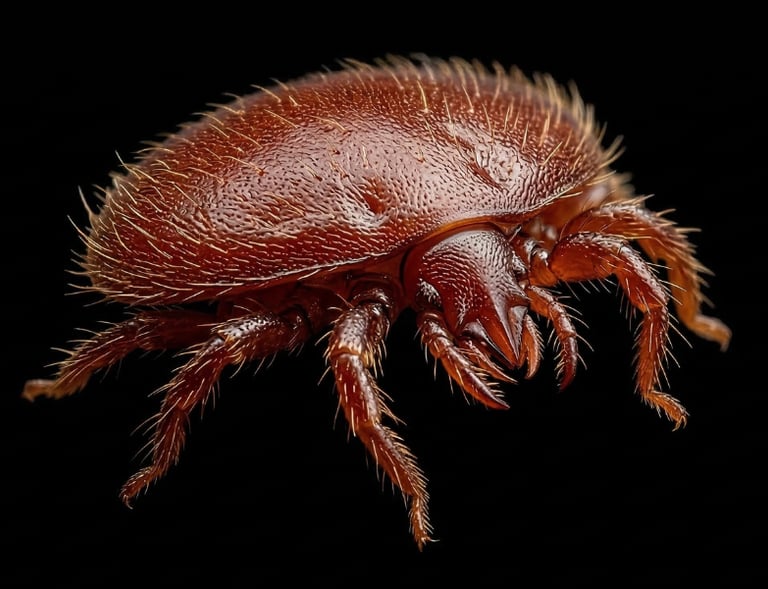
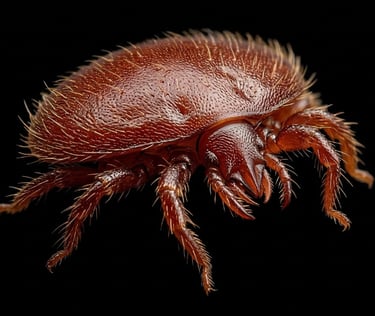
To defend the hive, we must first understand the anatomy of the invader. The Varroa destructor is not a typical insect; it is a specialised arachnid (related to spiders and ticks), perfectly evolved to exploit the honey bee. The Varroa mite is tiny, reddish-brown, and about the size of a sesame seed. In 2026, with the arrival of the pyrethroid-resistant Super Mite, identifying these physical traits is the first line of defence in this modern crisis.
1. The Crab-Like" Silhouette
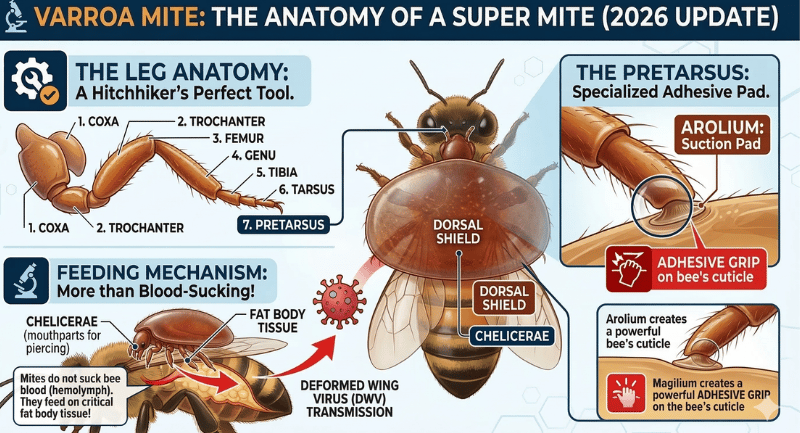
Specialised Shape: The most defining feature of a Varroa mite is its ellipsoid, compressed shape: "crab-shaped" and flat, allowing them to squeeze between the overlapping abdominal plates (sternites) of a bee to hide and feed. This physical adaptation is why they are often invisible to the naked eye and nearly impossible to remove via grooming until a hive is heavily infested. By tucking themselves under these plates, they gain direct access to the fat body tissue—the bee’s "liver"—which is vital for immune function and pesticide detoxification.
Physical Protection: Once they wedge themselves into these gaps, they are mechanically locked in place. The bee's own body plates act as a shield, preventing the mite from falling even if the bee is flying at full speed or shaking vigorously.
The Stealth Factor: Measuring approximately 1.1mm long and 1.5mm wide, they are wider than they are long.
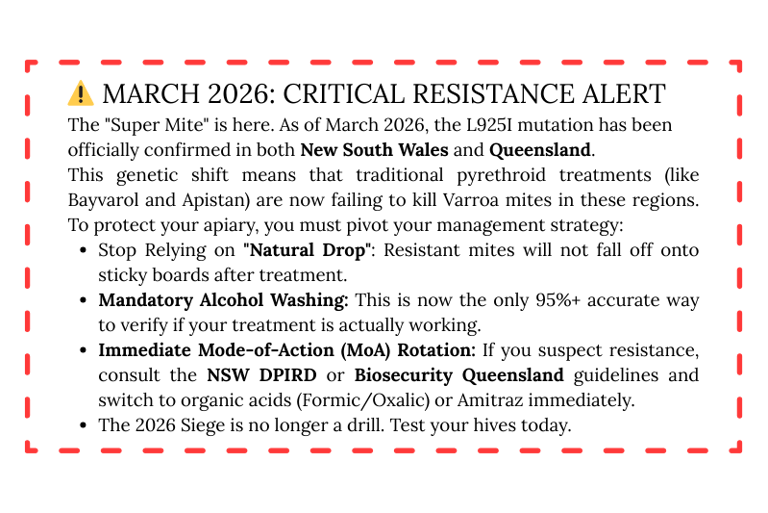
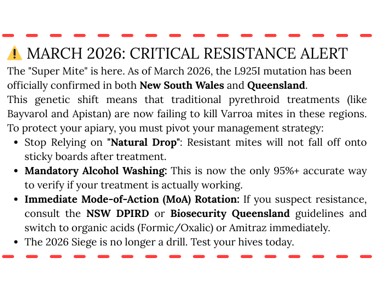
The "Super Mite" Evolution (2026): While they all look similar, genetic testing in March 2026 confirmed that populations in NSW and QLD now carry the L925I mutation. This makes these "Super Mites" resistant to common chemical treatments like Bayvarol and Apistan.
2. The Specialised "Feet" (Pretarsus)
Unlike many parasites that cling to hair, the Varroa mite uses specialised, cup-like structures on its legs called pretarsi.
The Grip: These act like suction cups, allowing the mite to latch onto the bee’s slippery cuticle with incredible strength.
Melli Magic Insight: This is why "sticky boards" alone are an insufficient monitoring tool in 2026; a healthy mite rarely "falls" off a bee unless it is dead or dying. A sticky board measures mortality, but an alcohol wash measures the invasion.
The Danger: You might see only 2 or 3 mites on your sticky board and think you are safe. However, because these mites aren't dying from traditional treatments, there could be thousands hidden under the sternites, actively destroying the fat body tissue.
3. The Feeding Apparatus (Chelicerae)
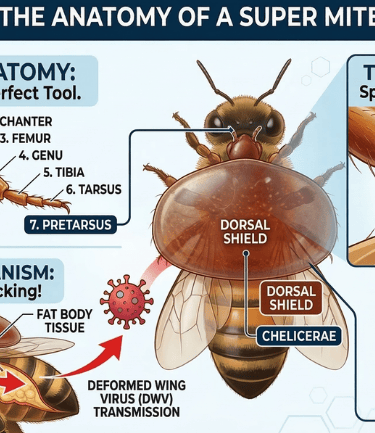
The mite does not possess chewing mouthparts. Instead, it has two retractable, blade-like structures called chelicerae.
The Breach: These blades puncture the soft intersegmental membrane between the bee’s sternites.
The Target: The mite doesn't just drink hemolymph (bee blood); it targets the fat body tissue. This organ is the bee's "liver," responsible for immune function and pesticide detoxification. By destroying the fat body, the mite renders the bee defenceless against both viruses and the very chemicals beekeepers use for treatment.
4. The L925I "Super Mite" Factor (2026 Update)
Visually, the Super Mite confirmed in NSW and QLD in March 2026 is identical to the standard mite. However, its internal "physical profile" has changed.
Nervous System Mutation: The L925I mutation has altered the sodium channels in the mite's nervous system.
The Result: Traditional pyrethroids (Bayvarol/Apistan) can no longer "plug" these channels, meaning the mite survives treatments that would have been 99% effective in 2022.
The Anatomy of a Kill: How Varroa Systematically Dismantles the Honey Bee
Forget the outdated myth that Varroa mites suck "bee blood" (hemolymph). Modern apiculture has revealed a much darker reality: the "Fat Body" Theft. This isn't just a feeding process; it is a surgical strike on the bee's most vital metabolic organ.
1. Draining the "Metabolic Engine"
The honey bee's fat body is the functional equivalent of the human liver and immune system combined. By consuming this tissue, the Varroa mite doesn't just weaken the bee—it removes its ability to function.
Immune System Blackout: The fat body is the command centre for the bee’s immune response. When a mite targets this tissue, it effectively "unplugs" the bee's internal defences, leaving it powerless against secondary infections.
The 10x Detoxification Failure: Without a healthy fat body, bees lose their ability to filter environmental toxins. A "Varroa-compromised" bee becomes ten times more vulnerable to standard agricultural sprays than a healthy hive could easily survive.
2. The Winter Collapse: Starving from the Inside Out
In Australia’s cooler regions or during the overwintering phase, the fat body is the difference between life and death.
Vitellogenin Depletion: This critical protein, stored in the fat body, is the "fountain of youth" for winter bees.
Energy Deficit: When mites drain these stores, the hive loses its internal fuel for heating. Mite-infested colonies don't just "get sick"—they physically run out of the energy required to maintain the winter cluster, leading to total hive starvation even when honey stores are present.
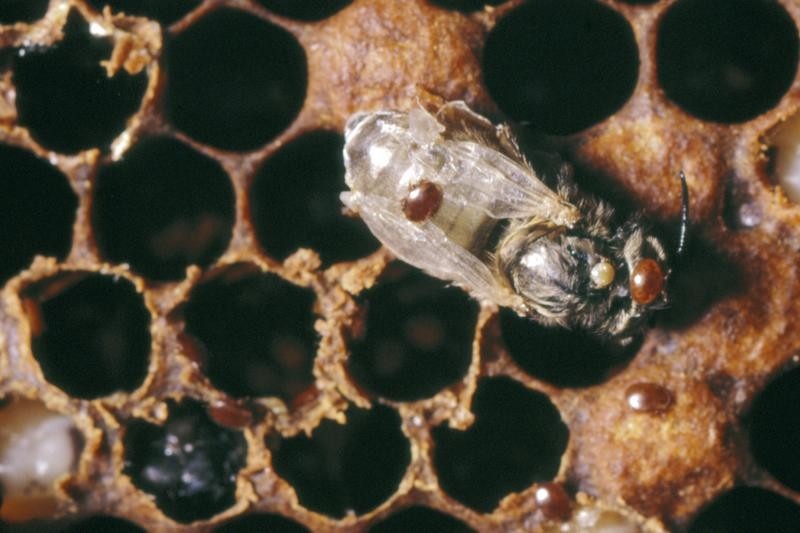
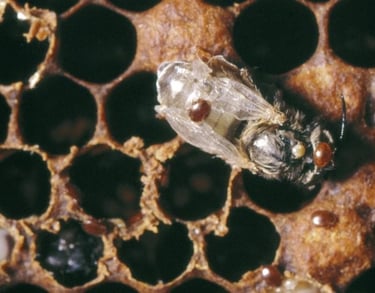
Varroa destructor mites on A honey bee WORKER: a macro view of the 2026 colony collapse driver.
"Courtesy The Animal and Plant Health Agency (APHA), Crown Copyright"
Best Varroa Mite Testing: Why the Alcohol Wash is the 2026 Gold Standard."
Don't Fall into a "False Sense of Security" in 2026
In 2026, the L925I mutation (the Super Mite) has made mites more resilient.
Under-Counting: Because these mites are healthier and better adapted to survive in Australian hives, the "natural drop" rate is often much lower than the actual infestation level.
The Danger: You might see only 2 or 3 mites on your sticky board and think you are safe. However, because these mites aren't dying from traditional treatments, there could be thousands hidden under the sternites, actively destroying the fat body tissue."The bottom line for Australian beekeepers in 2026 is clear: Alcohol washing is the only monitoring method with the 95%+ accuracy required to detect the L925I Super Mite before colony collapse occurs."
A sticky board measures mortality, but an alcohol wash measures the invasion."
1. Draining the "Metabolic Engine"
The honey bee's fat body is the functional equivalent of the human liver and immune system combined. By consuming this tissue, the Varroa mite doesn't just weaken the bee—it removes its ability to function.
Immune System Blackout: The fat body is the command centre for the bee’s immune response. When a mite targets this tissue, it effectively "unplugs" the bee's internal defences, leaving it powerless against secondary infections.
The 10x Detoxification Failure: Without a healthy fat body, bees lose their ability to filter environmental toxins. A "Varroa-compromised" bee becomes ten times more vulnerable to standard agricultural sprays than a healthy hive could easily survive.
2. The Winter Collapse: Starving from the Inside Out
In Australia’s cooler regions or during the overwintering phase, the fat body is the difference between life and death.
Vitellogenin Depletion: This critical protein, stored in the fat body, is the "fountain of youth" for winter bees.
Energy Deficit: When mites drain these stores, the hive loses its internal fuel for heating. Mite-infested colonies don't just "get sick"—they physically run out of the energy required to maintain the winter cluster, leading to total hive starvation even when honey stores are present.

Microscopic Intelligence: Watch the Varroa Mite in Action
Video Summary: The Anatomy of an Invasion
This video provides a rare, microscopic look at the Varroa destructor—the primary antagonist in the Australian "Super Mite" siege of 2026. It documents the mite's physical adaptations, from its flat, crab-like body to its specialised mouthparts, while explaining why this parasite is more than just a nuisance. By observing how the mite anchors itself to the bee's sternites and feeds on fat body tissue, beekeepers can better understand why traditional "sticky board" monitoring is no longer enough to detect a resistant infestation.
Key Timestamps for Beekeepers
0:45 – The "Shield" Shape: See how the mite’s flattened body allows it to disappear between the bee's abdominal plates.
1:20 – Suction Cup Anatomy: A close-up of the pretarsi (feet) that give the mite its incredible grip strength.
2:15 – The Feeding Breach: Watch how the mite uses its blade-like chelicerae to puncture the bee's intersegmental membrane.
3:10 – Dispersal & Movement: Observe the speed at which a mite can move from a foraging bee to a nurse bee within the hive.
The Best Varroa Mite Testing: Why the Alcohol Wash is the 2026 Gold Standard."
Don't Fall into a "False Sense of Security" in 2026
In 2026, the L925I mutation (the Super Mite) has made mites more resilient.
Under-Counting: Because these mites are healthier and better adapted to survive in Australian hives, the "natural drop" rate is often much lower than the actual infestation level.
The Danger: You might see only 2 or 3 mites on your sticky board and think you are safe. However, because these mites aren't dying from traditional treatments, there could be thousands hidden under the sternites, actively destroying the fat body tissue."The bottom line for Australian beekeepers in 2026 is clear: Alcohol washing is the only monitoring method with the 95%+ accuracy required to detect the L925I Super Mite before colony collapse occurs."
A sticky board measures mortality, but an alcohol wash measures the invasion."
In a "Siege," you don't count the enemies who died at the gate; you count the ones currently inside the walls. So, if you aren't washing, you're just guessing.
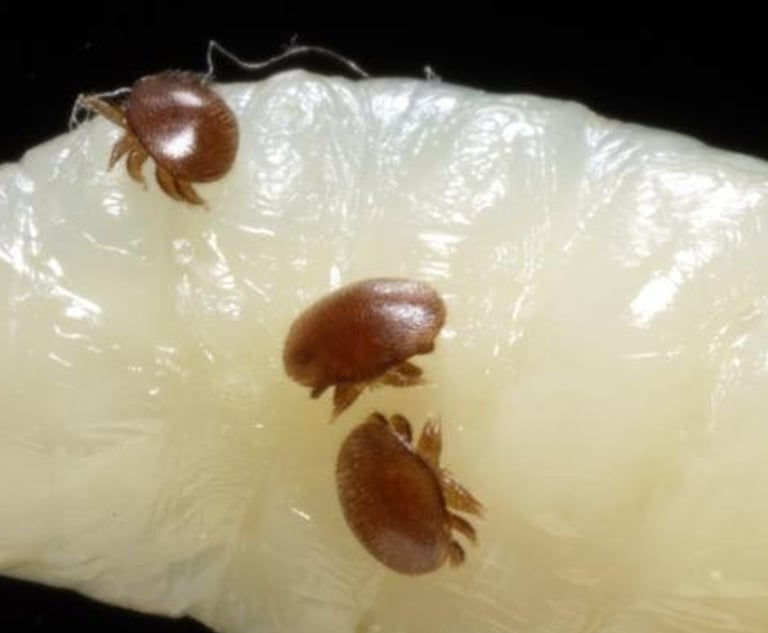
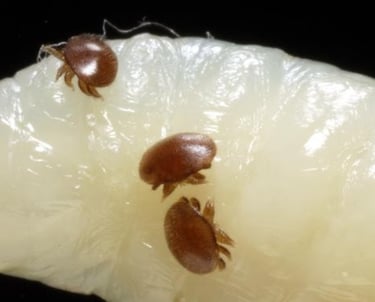
"Varroa Destructors on Honeybee Larvae, Crown Copyright"
"Varroa Testing 2026: Why the Alcohol Wash is the Best Way to Catch the 'Super Mite'"
In the 2026 beekeeping landscape, "guesswork" is a luxury no hive can afford. To understand why we advocate for the alcohol wash, we have to look at the hard data through two lenses: efficiency and evolution.
The 95% Truth
Data from peak bodies like the Elizabeth Macarthur Agricultural Institute (EMAI) and researchers like Dr Samuel Ramsey confirm a sobering reality: while a "sticky board" or a quick visual check might miss more than half of your infestation, the alcohol wash delivers a 95–100% recovery rate.
The "Super Mite" Blind Spot
The arrival of the L925I mutation in March 2026 has rendered traditional "treatment drop" counts obsolete. Since these Super Mites are genetically shielded against pyrethroids, a chemical strip won’t make them fall. They stay latched to the bees, invisible and active.
Because alcohol washing is a mechanical separation, not a chemical one, the mite’s pesticide resistance is irrelevant. The alcohol dissolves the "suction" of the mite’s feet, physically stripping the invader from the bee regardless of its genetic makeup.
The 3-Step Alcohol Wash Protocol (2026 Standard)
To defend your hive, you must move beyond guessing. This protocol is the "Gold Standard" for Australian beekeepers navigating the current siege. Before you begin, ensure you have a standard mite wash jar and a bottle of 70%+ Isopropyl Alcohol or Methylated Spirits.
Step 1: Collect the Sample (The "Nurse" Target)
The goal is to collect approximately 300 adult bees (about 1/2 a cup)
from the centre of the brood nest.
Why: Mites prefer nurse bees because they stay close to the developing larvae where the mites reproduce.
The Rule: Always check for the Queen first. If she is on the frame, move her to safety before shaking.
Action: Shake a frame of bees into a plastic tub, then scoop 1/2 cup into your jar, ensuring there is enough alcohol to submerge them fully.
Step 2: The "Bartender" Shake (Mechanical Separation)
The L925I mutation doesn't make mites bigger, but it makes them resilient. You must use physical force to break the "suction" of their feet (pretarsi).
Action: Screw the lid tight and shake the jar vigorously for 60 seconds.
The Motion: Do not just "roll" the jar. Use a firm, up-and-down motion—like a bartender shaking a cocktail or a painter mixing a can of spray paint. This mechanical agitation is what dislodges the mites from under the bee’s sternites.
Step 3: Filter & Count (The Truth)
Once the wash is complete, you need to separate the bees from the liquid to see the results.
Action: Pour the alcohol through the mesh lid or a fine coffee filter into a secondary white container or "viewing tub."
The Count: Look for tiny, reddish-brown, oval specks at the bottom.
The Math: In 2026, if you find 9+ mites (a 3% infestation rate), immediate intervention is required. In high-resistance zones (NSW/QLD), even finding 3 mites (1%) is a signal to rotate away from pyrethroids immediately.
"Watch: 2026 Varroa Mite Alcohol Wash Video Tutorial"

Varroa Mite Testing: Alternatives to the Alcohol Wash
The Soapy Water Wash (The Best Chemical Alternative)
If you cannot source 70%+ isopropyl alcohol or methylated spirits, Soapy Water is the most effective substitute. In fact, many commercial operations have switched to this because it is cheaper and non-flammable.
The Solution: Mix 2 tablespoons of low-suds detergent (like a professional windscreen washer fluid or a specific low-foam dish soap) per 1 litre of water.
Why it works: The soap breaks the surface tension of the water and the "suction" of the mite's feet (pretarsi).
The Catch: Like the alcohol wash, this is a lethal test for the 300 bees in your sample.
SEO Tip: Use the term "Low-Foam Detergent Wash" in your headers, as "soapy water" can sometimes produce too many bubbles, making it impossible to see the mites at the bottom of the jar.
The Sugar Shake (The Non-Lethal Alternative)
The Sugar Shake (or Sugar Roll) is the preferred method for beekeepers who do not want to sacrifice bees during testing.
The Solution: Use Pure Icing Sugar (Powdered Sugar). Do not use an icing mixture that contains cornstarch, as it can clump and harm the bees.
How it works: The fine dust of the sugar prevents the mite's suction-cup feet from gripping the bee's cuticle. The bees also begin "grooming" vigorously, which helps dislodge the mites.
The Drawback: In 2026, the Sugar Shake is considered less accurate than a wash. High humidity or a heavy nectar flow can cause the sugar to turn into a sticky mess, trapping the mites on the bees instead of releasing them.
90% as effective as an alcohol wash. For the L925I Super Mite, an alcohol wash is still the recommended choice for confirmed accuracy.
Breaking the "Suction" Physically, the mite uses suction-cup feet called pretarsi to lock onto the bee's smooth exoskeleton.
The "Dusting" Effect: The fine particles of the pure icing sugar (powdered sugar) act like a dry lubricant. The sugar coats both the bee and the mite, clogging the mite’s "suction cups."
The Result: The mite can no longer maintain its grip on the slippery bee cuticle. When you shake the jar, the mites tumble off through the mesh, while the bees remain unharmed inside.
Stimulating the "Grooming for Vigorous Cleaning: When a bee is covered in sugar, it immediately begins "aut grooming" (cleaning itself) and "allogrooming" (cleaning its neighbours).
The Result: This frantic movement helps physically knock the mites loose. The heat generated by the bees' movement also makes the mites more active and less stable, causing them to fall off more easily.
The Melli Magic Verdict: Use the Sugar Shake if you are a hobbyist with only one or two hives and are testing frequently. However, if you see any signs of wing deformity or spotty brood, move to an Alcohol Wash immediately for 100% certainty.
The "Accuracy Warning"
Alcohol Wash: 95–99% Accuracy (The Gold Standard)
Soapy Water Wash: 90–95% Accuracy (Reliable but lethal)
Sugar Shake: 80–90% Accuracy (Non-lethal but weather-dependent)
Melli Magic Honey®
+61-411234759
Melli Magic Honey® © 2026. All rights reserved.
ABN: 65366959676
149 The Grand Parade, Monterey, NSW, 2217