✅ "Pharmacy-trusted since 2013, now delivering Australia's rarest raw honeys direct to your door."

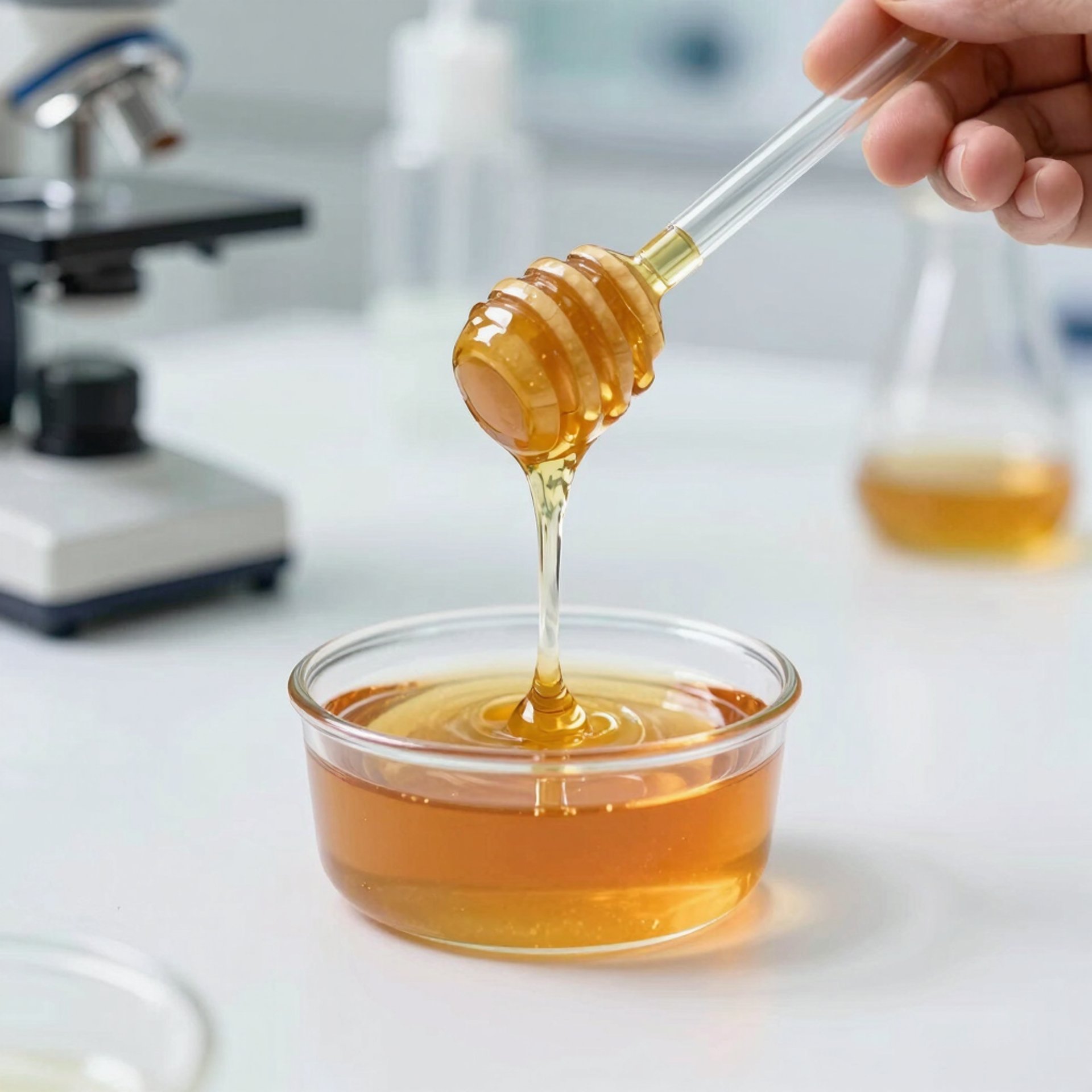
TA vs MGO Honey Ratings: Why Testing Methods & Potency Matters
If you're shopping for premium Australian honey, you've probably seen confusing labels: TA 35+, MGO 250, UMF 10+. What do these numbers actually mean? And more importantly, which rating tells you if a honey is truly bioactive and worth the investment?
In this plain-language guide, we break down TA vs. MGO ratings and explain exactly how Australian bioactive honeys are tested. Whether you are comparing Manuka or exploring rare Yarri Blackbutt (Eucalyptus patens), you will learn how to confidently choose the right honey to suit your health goals.
What do TA and MGO Honey Ratings Actually Measure?
When you purchase bioactive honey, you are investing in its potency. However, TA and MGO potency are tested and evaluated differently, and understanding this distinction can save you money while helping you choose the right honey.
TA (Total Activity) is Australia's own testing standard. It measures the total antioxidant and antibacterial power of honey using the agar diffusion method. TA ratings tell you the overall strength of a honey's natural compounds, the actual full picture of what makes it bioactive.
MGO (Methylglyoxal) is a single compound found in honey, particularly high in Manuka honey from Australia and New Zealand. It's one marker of antibacterial strength, but it measures only one active ingredient, not the full spectrum of bioactive compounds.
The Key Difference:
TA ratings give you a more complete, broader picture of a honey's bioactivity because they measure the combined effect of all active compounds. MGO is beneficial if you're specifically interested in the antibacterial power of Manuka honey MGO, but it doesn't tell you about other valuable compounds like enzymes, antioxidants, polyphenols, etc.
TA vs MGO Honey Ratings: Head-to-Head?
Manuka Honey vs Yarri Blackbutt: TA and MGO in Practice
While enzymes and chemical compounds behave differently, independent laboratory testing allows us to map the raw bioactive firepower of the TA scale against equivalent Manuka MGO ratings:
Both Manuka (from Australia and New Zealand) and Yarri Blackbutt (an Australian native eucalyptus honey) are prized for their bioactivity. Here's how they compare:
Daily Maintenance & Wellbeing
TA 10+ (MGO 263+ Equivalent): Considered an everyday table honey. Great for general well-being and natural sweetness, but offers minimal targeted bioactive support.
TA 15+ (MGO 514+ Equivalent): The entry-level grade for therapeutic honey. Suitable for mild daily wellness and gentle digestive support.
TA 20+ (MGO 829+ Equivalent): A highly respected mid-tier therapeutic grade. Excellent for daily immune support, sore throats, and general therapeutic use.
Advanced Bioactive Support
TA 25+ (MGO 1200+ Equivalent): A premium, high-strength bioactive tier. This is where enzyme-driven honeys begin to offer serious, advanced support for wound care and internal wellness.
TA 30+ (MGO 1600+ Equivalent): An ultra-premium, rare grade of honey. Delivers an intense antibacterial response reserved for highly targeted therapeutic applications.
TA 35+ (MGO 2000+ Equivalent): This exceptional grade delivers substantial bioactive strength, surpassing the antibacterial activity of the rarest and most expensive Manuka honeys.
Currently, TA35+ represents the absolute ceiling for scientifically verifiable Total Activity (TA) in honey. Accredited government facilities, including Australia's NMI (National Measurement Institute), calibrate their testing scales to a maximum of 35% phenol equivalence. Consequently, any sample exceeding this potency is simply reported as ">35%." Therefore, when brands advertise honey with ratings like TA40+, TA50+, or even TA70+, they are relying on unverified extrapolations. These elevated figures fall outside established testing parameters and cannot be officially certified.
The Industry Standard Equivalency Scale
See the detailed comparison - Yarri vs Manuka
MGO Testing: The Chemical Counting
How is Australian Bioactive Honey Tested? The Science Behind the Ratings
How Scientists Measure the Total Activity (TA) Rating
How Scientists Evaluate Manuka MGO (Methylglyoxal)
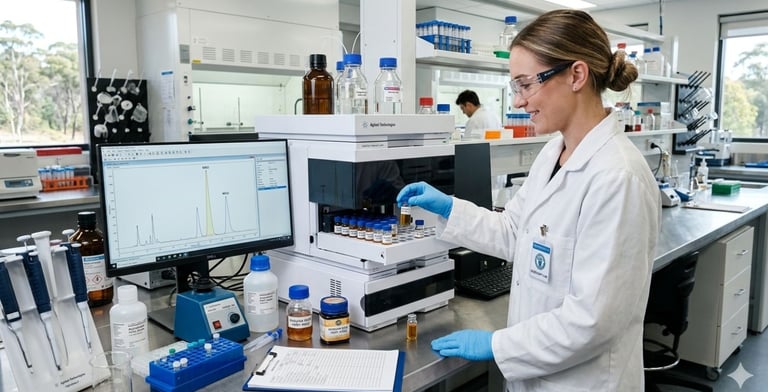
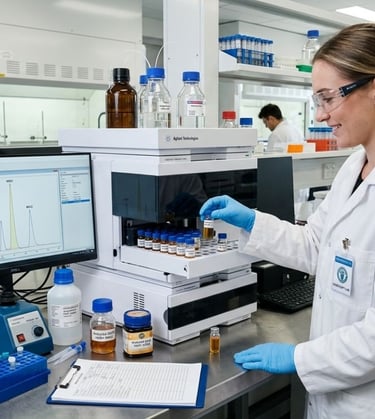
The Lab Process: (High-Performance Liquid Chromatography) HPLC
Extraction: A precise sample of Manuka honey is dissolved in a solvent to extract its organic compounds.
The HPLC Machine: The liquid sample is injected into a sophisticated instrument known as a High-Performance Liquid Chromatograph.
Separation: The machine pumps the liquid at incredibly high pressure through a specialised tube (column) packed with microscopic particles. Because different molecules move through this column at different speeds based on their size and chemical properties, they separate cleanly from one another.
Detection: As the separated molecules emerge from the column, a detector measures the amount of light they absorb at a specific wavelength, producing a digital peak on a graph.
Calculating the Final MGO Score
The size of the "MGO peak" on the laboratory graph tells scientists exactly how many milligrams of Methylglyoxal are packed into every single kilogram of honey.
MGO 400+ means the lab instrument detected a minimum of 400 mg of methylglyoxal per kilogram (1 kg) of honey.
MGO 2000+ means a massive 2000 mg (2 g) of pure chemical methylglyoxal is present per kilogram (1 kg) of honey.
Unlike chemical counting, Total Activity (TA) testing evaluates a honey's real-world bioactive performance. While other grading systems look for a static chemical footprint, TA testing is dynamic. Scientists utilise a microbiological assay—a live biological test—to observe exactly how effectively the dynamic enzymes in honeys like Yarri Blackbutt halt bacterial growth.
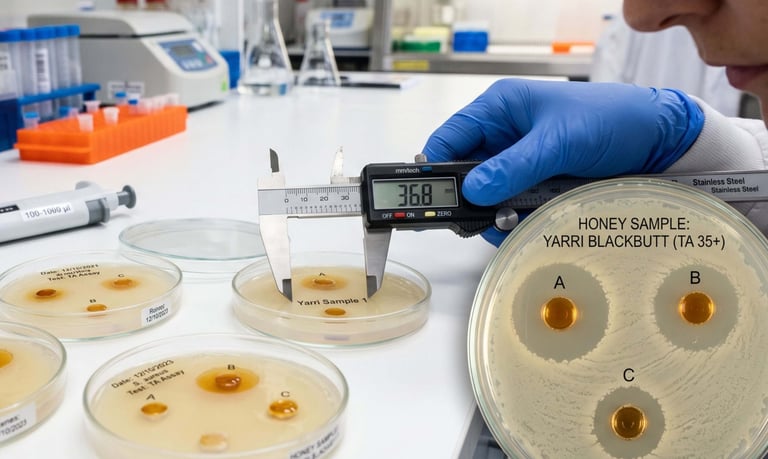
During this assay, the raw honey is introduced to living bacterial cultures in a Petri dish. This environment awakens the honey's inherent glucose oxidase enzyme, which begins continuously generating targeted bursts of active hydrogen peroxide. By measuring the physical area where the bacteria are successfully eradicated (the Zone of Inhibition), scientists can certify the complete, combined therapeutic firepower of both the living enzymes and the native plant factors working in unison.
Unlike live biological testing used for TA, evaluating Manuka's MGO rating is an exercise in analytical chemistry. It does not measure live bacterial death or functional performance.
Instead, laboratories utilise High-Performance Liquid Chromatography (HPLC) to precisely extract and quantify the physical mass of a single, static molecule: Methylglyoxal (MGO).
By isolating these organic compounds, scientists calculate exactly how many milligrams of MGO are present per kilogram of honey. It is a highly accurate chemical census, measuring molecular density rather than dynamic therapeutic power.
The Lab Process: The Agar Well Diffusion Method
Preparing the Benchmark: Scientists coat a Petri dish containing nutrient agar with a standardised strain of bacteria (Staphylococcus aureus), which is utilised globally as the strict scientific benchmark for measuring antimicrobial resistance.
Cutting the Wells: Small circular holes (wells) are punched into the agar plate.
Adding the Honey: Samples of the honey are diluted with water—a crucial step that awakens the natural glucose oxidase enzyme—and placed into the wells.
The Control Solution: In separate wells on the same plate, scientists add varying concentrations of pure phenol (a powerful industrial antiseptic, such as 20% or 35% solutions) to act as a comparative baseline.
Incubation & Measurement: The plate is incubated at 37°C for 24 hours. As the honey's enzymes wake up and release hydrogen peroxide, the peroxide diffuses outward into the agar, killing the bacteria around the well. This leaves a clear ring of dead bacteria officially known as the Zone of Inhibition.
Calculating the Final TA Score
To determine the final certification, scientists measure the precise diameter of the honey's Zone of Inhibition and compare it directly to the zones created by the phenol solutions. The results are expressed as TA 10, TA 20, etc.
TA 20+: The honey creates a clearing zone equal to a 20% pure phenol solution.
TA 35+: The honey matches or exceeds the clearing power of a 35% phenol solution, earning an elite, high-strength badge.
Because this physical test captures the combined, dynamic force of both the active hydrogen peroxide and any native plant-based non-peroxide factors, it is accurately termed Total Activity.
Try the Agar Well Diffusion Test
Common Questions About TA vs MGO Honey!
What is TA honey?
TA honey stands for Total Activity honey. It measures the combined antibacterial strength of a honey, including both hydrogen peroxide activity from natural enzymes and plant-based non-peroxide factors, expressed as a number such as TA 10, TA 15, TA 20, TA 25, TA 30 or TA 35+. The higher the number, the stronger the antimicrobial power.
What does NPA mean in honey?
NPA stands for Non-Peroxide Activity. It measures only the heat-stable, plant-based compounds in honey (such as methylglyoxal MGO in Manuka), without including the enzyme-driven hydrogen peroxide activity that TA captures.
What is the difference between TA and NPA honey?
TA (Total Activity) measures everything working together to fight bacteria, while NPA (Non-Peroxide Activity) measures only what is left after the honey's natural enzymes are removed. Therefore, TA is a more complete, broader measure of a honey's bioactive power.
What makes TA honey so bioactive?
TA honey gets its antibacterial power from glucose oxidase, a natural enzyme that activates when honey is diluted. This enzyme continuously generates hydrogen peroxide, which kills bacteria on contact. Native Australian honeys like Yarri Blackbutt are exceptionally high in this enzyme activity.
What drives NPA activity in honey?
NPA activity in honey is driven by methylglyoxal (MGO), a heat-stable chemical compound found naturally in certain floral nectars. Unlike enzyme-based hydrogen peroxide activity, MGO does not break down when heated, making it the basis for Manuka honey's MGO rating system. The higher the MGO, the stronger the non-peroxide antibacterial effect.
Native Western Australian honeys consistently achieve the highest TA ratings. Yarri Blackbutt (Eucalyptus patens), Marri, and Jarrah honeys regularly test at TA 20+ to TA 35+, making them among the most bioactive honeys in the world.
TA 35+ and NPA 35+: What are the Scientific Differences?
Which Australian honeys have the highest TA rating?
Shop for Bioactive Honey
Shop Premium Australian Bioactive Honey: Now that you understand the science behind TA vs MGO honey ratings, you can confidently choose the exact therapeutic strength for your wellness needs. Shop our pure, raw, unpasteurised collection of Australian bioactive honeys, pharmacy-trusted since 2013.
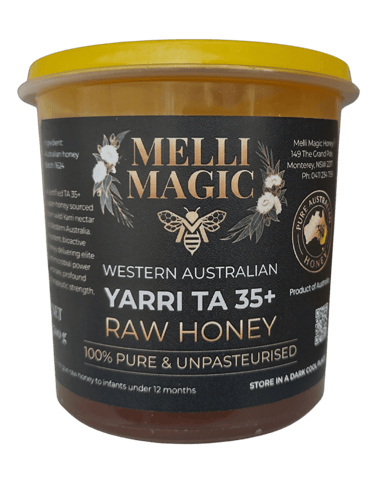
Experience the natural, enzyme-rich protection provided by our Marri honey, our Tea Tree honey, and our other bioactive honeys. For the highest level of raw, dynamic protection, try our flagship honey: pure, raw, and unpasteurised Yarri Blackbutt honey. This honey has been independently tested and certified, boasting an impressive Total Activity (TA) rating of 35+.
Ready to experience the difference?
Shop all our bioactive Australian honeys.
Or if you have questions, contact us at busybees@mellimagichoney.com.
Melli Magic Honey®
+61-411234759
Melli Magic Honey® © 2026. All rights reserved.
ABN: 65366959676
149 The Grand Parade, Monterey, NSW, 2217