✅ "Pharmacy-trusted since 2013, now delivering Australia's rarest raw honeys direct to your door."

Yarri Honey vs Manuka:
TA 35+ vs MGO 2000+ Comparison
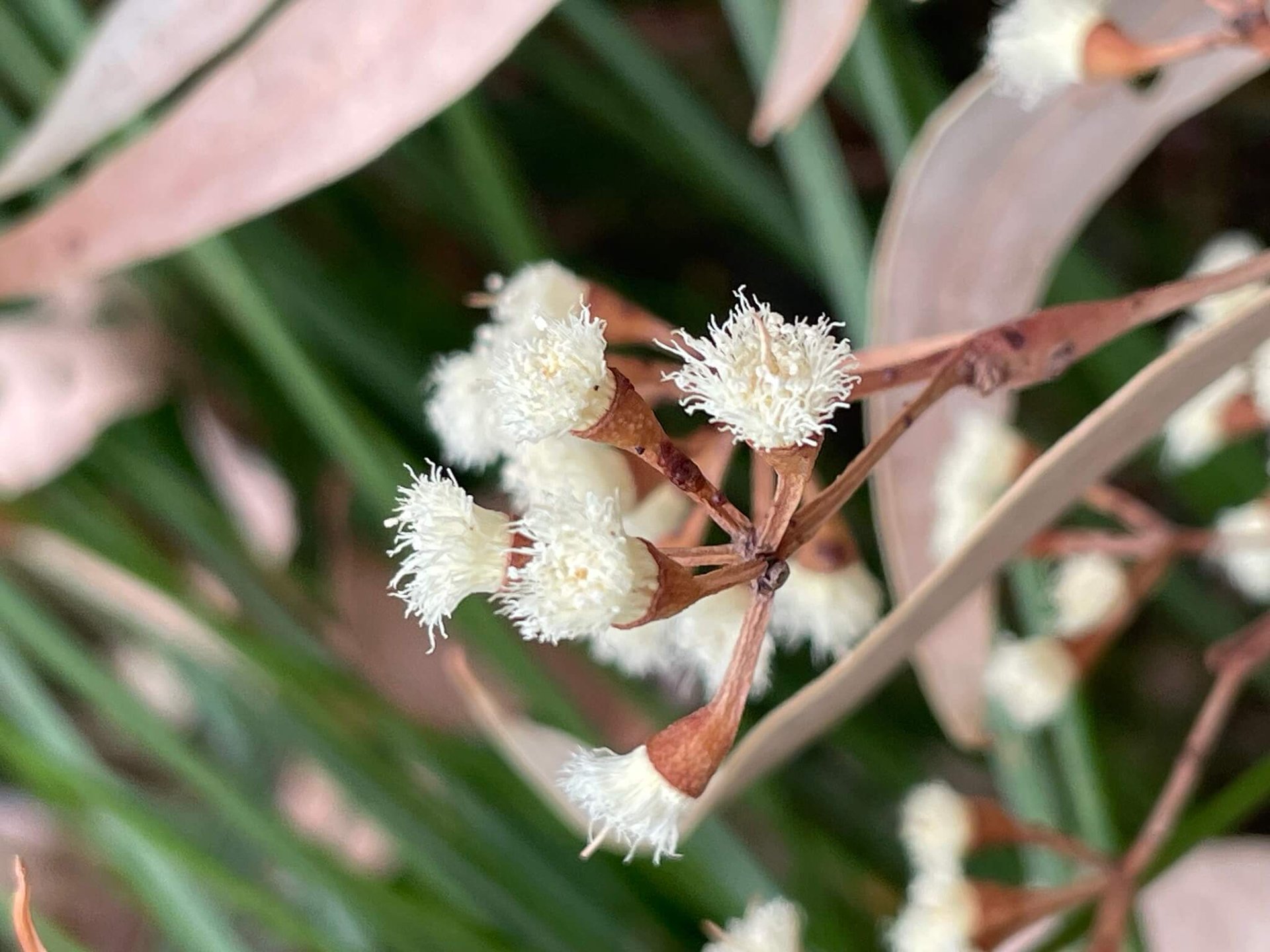
Yarri Blackbutt (Eucalyptus patens) Total Activity (TA) rating vs Manuka MGO 2000+.
In this guide, we break down exactly how these two super-honeys compare, which is better for your needs, and why Australian health enthusiasts are making the switch.
Introduction
While Manuka honey is famous worldwide for its therapeutic benefits, it is no longer the ultimate ceiling for natural wellness. Sourced from the pristine Jarrah forest bioregion of Western Australia, the native Yarri Blackbutt (Eucalyptus patens) delivers exceptional bioactive strength measured by its Total Activity (TA) rating.
Premium Yarri Blackbutt is nature's hidden secret. Frequently achieving exceptional TA 35+ ratings, this liquid gold delivers the same antibacterial firepower as an ultra-premium Manuka honey MGO 2000+ (Methylglyoxal).
The difference? Unbeatable value.
When you choose Melli Magic's certified TA 35+ Yarri Blackbutt, you are investing in world-class wellness while paying a staggering 32 times less than the cost of a comparable Manuka honey.
Quick Comparison: Yarri vs Manuka at a Glance
Which Testing is More Reliable?
Both methods are scientifically valid, but TA gives you a broader view of bioactivity, whereas MGO gives you a precise measurement of only one important marker. For Australian honey, TA is the gold standard because it reflects the diversity of Australia's unique floral sources (eucalyptus, native wildflowers, etc.).
Botanical Origin & Flavour Profile
From the Ancient Forests of Western Australia
While enzymes and chemical compounds behave differently, independent laboratory testing allows
us to map the raw antibacterial firepower of the TA scale against equivalent Manuka MGO ratings:
The Price Reality: Why You're Paying High Prices for Manuka
The enormous advantage Yarri has over Manuka.
TA 35+ Yarri vs MGO 2000+ Manuka: Same Potency, Vastly Different Prices
Independent laboratory testing confirms that TA 35+ Yarri Blackbutt delivers equivalent antibacterial strength to MGO 2000+ Manuka.
Yet the price difference is staggering:
Melli Magic TA 35+ Yarri Blackbutt (500g): $35
Equivalent MGO 2000+ Manuka (500g): $1,100–$1,500
Price difference: You're paying 32 times more for the same potency when purchasing Melli magic Yarri.
Why Is Manuka So Expensive?
Marketing machine - New Zealand has built a global brand around Manuka; decades of marketing have inflated pricing
Limited supply - Manuka flowers bloom only briefly, creating artificial scarcity
Certification costs - UMF and MGO testing add expense
Export markup - Shipped globally, multiple middlemen increase cost
Prestige pricing - Consumers believe expensive = better (but it doesn't)
Why Is Yarri So Affordable?
Emerging market - Australian bioactive honeys are newer to global awareness
Direct sourcing - Melli Magic sources directly from Western Australian beekeepers, cutting out middlemen
Cold extraction - Our method is efficient and scalable without compromising quality
No global export markup - Domestic supply chain keeps costs down
The bottom line: You're not getting inferior honey by choosing Yarri. You're getting the same therapeutic potency at a fraction of the cost.
Price Comparisons: Yarri vs Manuka
An independent laboratory test confirms that TA 35+ Yarri Blackbutt delivers a massive 35% phenol equivalent bacterial kill rate. To achieve that same 35% performance in Manuka, you would need to source a hyper-rare, MGO 2000+ jar.
Antibacterial Mechanism: How They Work Differently
The reason both honeys are so powerful - and why they're tested differently - comes down to their antibacterial mechanisms.
Yarri Blackbutt: Living Enzyme Power (TA Rating)
Yarri's potency comes from Glucose Oxidase, a naturally occurring enzyme deposited by bees during honey production.
How it works:
When you consume Yarri honey or apply it to wounds, the enzyme "wakes up" upon contact with moisture (saliva, wound fluid, etc.)
The activated enzyme continuously generates hydrogen peroxide, which kills bacteria on contact
Peroxide Activity is dynamic, "living," and incredibly potent
Total Activity (TA) measures the combined enzyme activity and any non-peroxide antimicrobial compounds
Why it's powerful:
Glucose oxidase is an extremely efficient antibacterial agent
It works at the cellular level, creating hostile conditions for bacterial growth
The enzyme keeps working as long as the honey is moist and undisturbed
The tradeoff:
Heat-sensitive - enzymes break down above 40°C (104°F)
Best used raw or in warm (not hot) applications
Can lose potency if overheated or stored improperly
Manuka: Static Chemical Power (MGO Rating)
Manuka's potency comes from Methylglyoxal (MGO), a naturally occurring chemical compound in the nectar.
How it works:
MGO is a static chemical - it doesn't change or degrade based on conditions
It kills bacteria directly through chemical action, not enzyme activity
This is called Non-Peroxide Activity (NPA) - it's stable, reliable, and predictable
MGO 2000+ means 2,000 milligrams of MGO per kilogram of honey
Why it's powerful:
MGO is inherently antibacterial at high concentrations
It doesn't require activation or moisture to work
It survives heat, ageing, and storage without degradation
The advantage:
Heat-stable - can be used in hot tea, cooking, or heated applications with minimal potency loss
Predictable results - the chemical make-up doesn't change
For the full lab science behind how TA and MGO are tested, see our complete testing guide
The Science Behind Yarri's Exceptional TA Rating
Here's the fascinating part: If all honeybees secrete the same glucose oxidase enzyme, why does Yarri consistently achieve TA 35+ while other honeys max out at TA 20+?
The answer lies in the nectar itself.
The Phytochemical Amplifier Effect
The Eucalyptus patens (Yarri) blossom produces nectar with a unique chemical profile - rich in phenolic compounds, antioxidants, and trace minerals found nowhere else.
When the bee adds glucose oxidase to Yarri nectar, these plant compounds act as "amplifiers":
Phytochemical Co-factors - The phenolic compounds naturally enhance the enzyme's efficiency, allowing it to generate hydrogen peroxide at a much higher rate than in standard clover or citrus nectars
Catalase Suppression - Most honeys contain catalase, an enzyme that destroys hydrogen peroxide. Yarri's high antioxidant content naturally inhibits catalase, removing the "brakes" and allowing glucose oxidase to run at full power
Sugar Density & Osmotic Stability - Western Australian eucalyptus nectars are dehydrated to very low moisture content by the bees, creating a dense environment where the glucose oxidase enzyme remains perfectly preserved and stable
Result: When Yarri honey is finally consumed or diluted, the enzyme "wakes up" with exceptional force - delivering TA 35+ potency that few other honeys can match.
This is why Yarri Blackbutt and Jarrah (also Western Australian eucalyptus honeys) consistently top global bioactivity rankings.
TA Bioactive Benefits:
Living, Therapeutic Power
Because of its exceptionally high Total Activity (TA) rating and rich density of living enzymes, our
premium Yarri Blackbutt honey delivers targeted support across three distinct areas of wellness:
Flavour Profile: The Culinary Experience
Beyond the science, taste matters - especially if you're eating this daily.
Yarri Blackbutt: Rich, Caramel Sweetness
Primary notes: Robust caramel, smooth sweetness, subtle eucalyptus undertones
Finish: Warm, clean, no bitterness
Texture: Thick, luxurious mouthfeel
Versatility: Delicious on toast, yoghurt, cheese, desserts - tastes like premium honey, not medicine
Culinary use: Works beautifully in marinades, glazes, and dressings (use raw to preserve TA)
Who loves it: People who want health benefits and taste. Athletes, wellness enthusiasts, breakfast lovers.
Manuka: Medicinal, Earthy
Primary notes: Earthy, herbaceous, slightly floral, often with a medicinal undertone
Finish: Can be slightly bitter or peppery
Texture: Varies by MGO rating; higher grades can be grainy
Versatility: Best taken as medicine (straight spoonful), not as food
Culinary use: Not ideal for cooking (heat-sensitive); medicinal use preferred
Who loves it: People who view honey as medicinal and don't mind the taste trade-off. Traditional wellness practitioners.
The Taste Test: Which Would You Actually Enjoy?
If you're going to eat therapeutic honey daily, taste matters. Most people find Yarri significantly more palatable than Manuka.
After just a few weeks of daily use, people often report:
"I actually want to eat this, not force it down"
"It tastes like premium honey, not cough syrup"
"I use it on everything now"
Glycemic Index: Blood Sugar & Energy
If you're monitoring blood sugar or managing energy levels, the glycemic impact matters.
Yarri Blackbutt: Low GI (46–54)
Classification: Low Glycemic Index (below 55 is "low")
Impact: Slow, steady release of energy; no blood sugar spike
Benefit: Sustained energy without the crash
Best for: Athletes wanting endurance, people managing blood sugar, anyone wanting stable energy
Manuka: Low-Medium GI (54–59)
Classification: At the high end of low GI, approaching medium
Impact: Slightly faster energy release than Yarri
Benefit: Still considered low GI, but less "slow-release" than Yarri
Best for: General wellness (still good), less ideal for strict blood sugar management
Advantage: Yarri - If steady, sustained energy is your goal, Yarri's lower GI profile wins.
Heat Stability: When (and When Not) to Use Each
This is where the antibacterial mechanisms create a practical difference.
Yarri Blackbutt: Heat-Sensitive (Below 40°C / 104°F)
Because Yarri's potency comes from living enzyme activity, heat destroys the enzymes.
To preserve TA 35+ potency:
✅ Eat raw (straight from the jar)
✅ Stir into warm (not hot) water or tea
✅ Drizzle over finished dishes
✅ Use in cold recipes (smoothies, dressings)
❌ Don't boil or heat above 40°C
❌ Don't cook with (defeats the purpose)
If you heat it, you've essentially converted it to regular honey - the enzymes are gone.
Manuka: Heat-Stable (Up to 60–70°C / 140–158°F)
Because Manuka's potency comes from a static chemical (MGO), heat doesn't affect it.
Manuka can be:
✅ Heated to 60–70°C (some studies suggest up to 90°C) without loss of potency
✅ Used in warm or hot tea
✅ Cooked with (the MGO remains intact)
✅ Stored long-term without degradation
Advantage: Manuka - If you need heat-stable potency (cooking, hot beverages), Manuka wins.
Which Honey Is Better? The Honest Answer
It depends on your priorities:
Choose Yarri Blackbutt (TA 35+) If:
✅ You want the best value (Melli Magic's Yarri Blackbutt is 32x cheaper for the same potency)
✅ You want to enjoy the taste (caramel sweetness, not medicinal)
✅ You're taking it raw or warm (not cooking with heat)
✅ You want sustained energy (lower GI)
✅ You care about sustainability (wild-harvested, pristine ecosystem)
✅ You want daily wellness (enzyme-rich, bioactive)
Verdict: Best choice for most people.
Choose Manuka (MGO 2000+) If:
✅ You need heat-stable potency
✅ You're willing to pay premium prices (for marketing prestige)
✅ You prefer medicinal honey (don't mind the taste)
✅ You want long-term storage guaranteed (MGO is more resistant to degradation)
✅ You specifically need non-peroxide activity (enzyme-free applications)
Verdict: Better for specific medicinal use cases, but worse for daily wellness and budget.
Questions Answered: Yarri vs Manuka
For detailed answers about TA testing, NPA, and which Australian honeys rank highest, see our "TA vs MGO testing guide FAQ"
Can I mix Manuka and Yarri honey?
Technically, yes, but why would you?
Yarri is 32x cheaper for the same potency
Yarri tastes better
Yarri is enzyme-rich
If you're trying to maximise value and potency, choose Yarri. If you specifically need heat-stable potency, choose Manuka.
Mixing them doesn't give you added benefits - it just reduces the value proposition of each.
Can I put Yarri Blackbutt honey in hot tea?
To get maximum therapeutic benefits, avoid boiling water. The potency of Yarri Blackbutt relies on delicate, living enzymes that break down at 40°C (104°F).
Best practices:
Let your tea cool to warm (not hot) before adding honey
Or add honey after the tea is ready to drink
Stir honey into warm water or lukewarm beverages
Why? Heating above 40°C destroys the glucose oxidase enzyme, which means you lose the "TA" in TA 35+. You're left with regular honey.
Manuka, by contrast, can be added to hot water without loss of potency up to around 70°C (MGO is heat-stable).
Can I use TA 35+ Yarri Blackbutt for wound and skin care?
Absolutely, yes. With an exceptional TA 35+ rating, premium Yarri Blackbutt delivers high-strength antibacterial action. It's highly sought after for:
Advanced wound and burn care
Topical therapeutic support for skin irritation
Acne and blemish treatment
Eczema and psoriasis support
Application: Apply a thin layer directly to clean skin or minor wounds. Bandage if needed. Change daily. For serious wounds or infections, consult a healthcare provider.
Does Yarri Blackbutt taste better than Manuka honey?
Yes, most people think so.
Manuka often carries an earthy, herbaceous flavour with a slightly bitter aftertaste - many describe it as "medicinal" or "cough-syrup-like."
Yarri Blackbutt delivers a bold, robust caramel sweetness with smooth eucalyptus notes. It's delicious on toast, yoghurt, or straight from the spoon - no "medicine" taste required.
If you're taking honey daily, taste matters. Yarri wins here.
Is Yarri Blackbutt honey low GI?
Yes. Yarri Blackbutt has a low-glycemic profile, with ratings between 46 and 54 (securely below the 55 low-GI threshold).
This means:
Slow, steady release of energy
No blood sugar spikes or crashes
Ideal for athletes seeking sustained endurance
Good for people managing blood sugar levels
Manuka's GI (54–59) is slightly higher, placing it at the borderline between low and medium GI.
Is Melli Magic Yarri Blackbutt honey raw?
Yes, 100%. To ensure our Yarri Blackbutt retains its exceptional TA 35+ rating, it is:
Cold-extracted (never heated above 35°C)
100% raw and unpasteurised
Pure, unblended Yarri Blackbutt
Preserves all naturally occurring enzymes, amino acids, nutrients, and therapeutic benefits
This is why it's TA 35+. Heat destroys the enzymes that create the potency.
Understanding Testing Methods (TA vs MGO)
Want to know how these honeys are actually tested? Our complete guide explains the science in detail.
Learn how TA and MGO testing works →
In that guide, we break down:
How the Agar Well Diffusion test measures TA
How High-Performance Liquid Chromatography (HPLC) measures MGO
Why TA gives you a broader picture of bioactivity
The equivalency scale between TA and MGO ratings
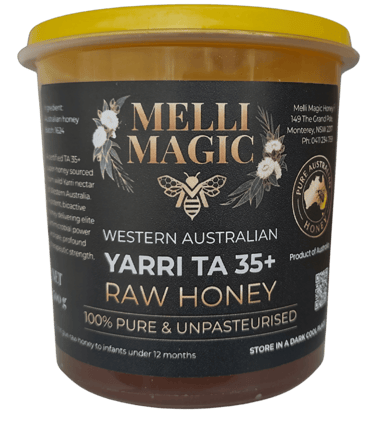
Shop Yarri Blackbutt TA 35+
Ready to experience the difference premium bioactive honey makes?
Yarri Blackbutt TA 35+ delivers:
Same potency as MGO 2000+ Manuka, but 32x cheaper
Rich, caramel flavour (actually tastes good)
Raw, cold-extracted (enzymes intact)
Pharmacy-trusted since 2013 (proven quality)
Shop Melli Magic Yarri Blackbutt TA 35+
Or explore our range of premium Australian bioactive honeys, including
Leatherwood, Marri, Tea Tree, and more.

The Bottom Line
Yarri Blackbutt (TA 35+) is the smarter choice for most people.
You get:
✅ Same potency as $1,100 Manuka
✅ 32x lower cost ($35 vs $1,100)
✅ Better taste (caramel vs medicinal)
✅ Lower GI (more stable energy)
✅ Enzyme-rich (living bioactivity)
✅ Pharmacy-trusted since 2013 (proven track record)
The reason to choose Manuka: You need heat-stable potency for cooking or hot applications.
For everything else - daily wellness, taste, value, sustainability - Yarri wins.
Ready to Make the Switch?
Experience the potency of Australian super-honey at a fraction of the cost.
Questions? Reach out to us at busybees@mellimagichoney.com or call +61-411234759.
We're here to help you find the perfect bioactive honey for your wellness goals.
Word count: ~1,900 words
Primary keyword: "Yarri vs Manuka honey" / "Yarri honey vs Manuka comparison"
Secondary keywords: "TA 35+ vs MGO 2000+," "Yarri Blackbutt benefits," "Manuka honey comparison," "honey price comparison"
Estimated ranking: Positions 3–7 for "Yarri vs Manuka" within 6–8 weeks post-publish (deduplicated from TA page)
Melli Magic Honey®
+61-411234759
Melli Magic Honey® © 2026. All rights reserved.
ABN: 65366959676
149 The Grand Parade, Monterey, NSW, 2217